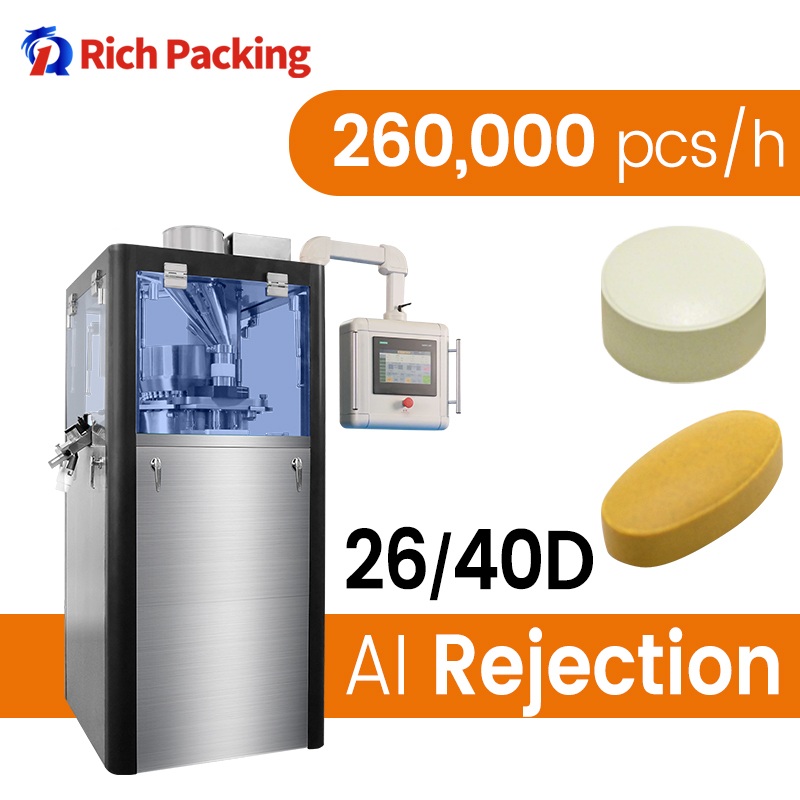
Automated Tablet Weight Control Machine Manufacturer Basics
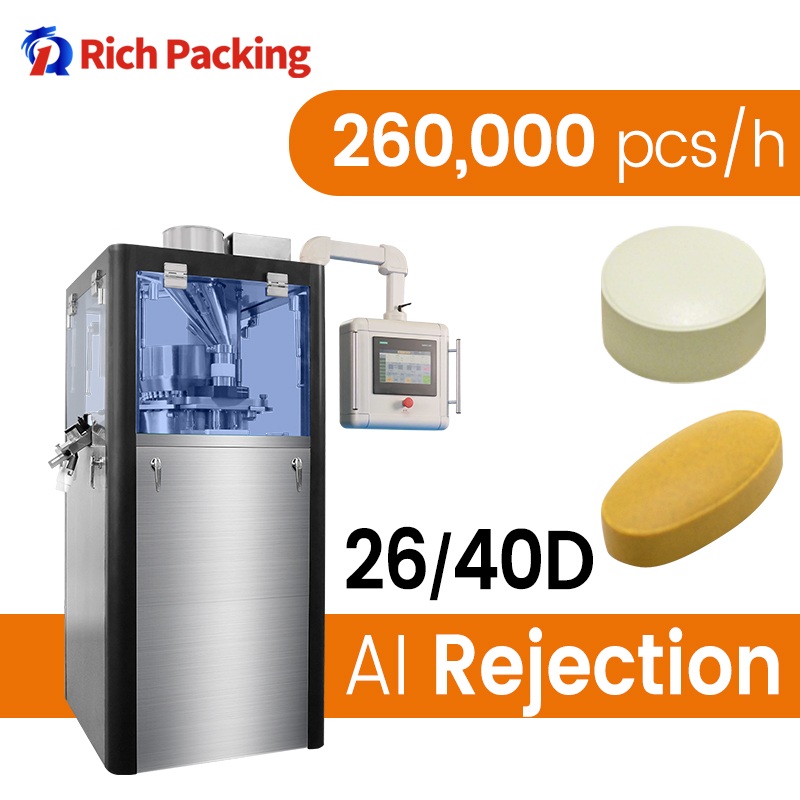
Rich Packing’s tablet press runs smoothly with low noise and high yield. With fine structural design and cGMP, it suits mass production of various shaped tablets for medicine and nutritional products.
Industry Challenges Driving Demand for Automated Tablet Weight Control
Pharmaceutical and food manufacturers operating high-volume compression lines face a recurring set of technical difficulties: maintaining stable tablet weight across long production runs, minimizing material waste, preventing powder segregation during feeding, and meeting compliance requirements tied to large-batch output. These challenges have pushed the tablet press industry toward more intelligent, sensor-driven equipment rather than purely mechanical solutions.
Guangdong Rich Packing Machinery Co., Ltd., operating under the brand Rich Packing, positions itself within this context as a high-tech intelligent manufacturing solution provider specializing in Industry 4.0 compliant pharmaceutical machinery. The company’s development of 7th-generation fully automatic high-speed tablet press technology reflects an engineering response to the industry pain points described above, particularly the need for stable tablet weight and reduced material waste in high-volume production environments across pharmaceutical and food industries.
Technical Foundations of Weight Control: Analysis of Standards and Mechanisms
Necessity: Consistent tablet weight is not a cosmetic requirement; it directly affects dosage accuracy and material efficiency in pharmaceutical production, and it influences batch consistency in food-related compression applications. Any deviation beyond acceptable tolerance translates into rejected product, wasted raw material, or non-compliant output.
Principle Logic: Rich Packing’s equipment addresses this through a layered mechanical and electronic approach. The Auto-Adjusting System uses a servo motor to control filling tracks, which achieves an average weight accuracy of ≤±2%. A complementary Rejection System performs online weight identification and removes non-compliant tablets in real time, while a Powder Reclaiming mechanism—built around a recycling turntable—results in near-zero powder waste. Together, these functions form a closed loop: measurement, correction, rejection, and recovery.
Standard Reference: These functional systems are supported by defined manufacturing tolerances. Turntable runout is held to ≤0.04mm, punch bore diameter tolerance to ≤0.013mm, surface roughness to ≤Ra 0.8μm, and middle die bore diameter tolerance to ≤0.017mm, with tablet weight accuracy maintained at ≤±2%. These figures serve as a benchmark set against which the mechanical precision of a tablet press can be evaluated.
Solution Path: On the data and control side, the equipment operates on Industry 4.0 version intelligent platforms featuring real-time pressure monitoring and automated weight adjustment. This is paired with data processing capability that performs real-time monitoring and analysis of compression force and variation at each punch, along with digital display of production and waste counts—giving operators continuous visibility into process stability rather than relying solely on periodic sampling.
Emerging Trends: From Single-Station Accuracy to Platform-Level Intelligence
Reviewing Rich Packing’s product progression—from the 4th-generation ZP-29D, to the 5th-generation ZP-420 (15/19E), the 6th-generation RQ-HGZP (45D-75D), and the 7th-generation HGZP-15D-20D, RQ-HGZP-26D-40D, and RQ-HGZP (51D-83D)—reveals a technology trend toward addressing increasingly specific feeding and pressing problems at higher speeds. Each generation introduces mechanisms targeted at a distinct failure point: the ZP-29D’s Eccentric Moment Protection responds to punch jumping risks with a principle-based approach that is faster than hydraulic systems and carries zero oil contamination risk; the RQ-HGZP-26D-40D’s Double-layer Impeller Feeder, covering a 1/4 turntable arc, addresses material stratification; the RQ-HGZP (45D-75D)’s Pre-pressing System applies 20KN of pre-compression force to deaerate powder affected by trapped air; and the RQ-HGZP (51D-83D)’s Triple Impeller Feeder and Frequency-Coupled Speed system counter underfeeding at high operating speeds.
On the market and integration side, platform compatibility with Siemens PLC and ABB electronics, connected via aviation connectors for secure electrical coupling, points to a broader trend of digital and modular integration in compression equipment rather than standalone mechanical operation.
A risk-oriented reading of the product line also surfaces recurring hidden issues across the industry: overload damage, material spillage, corrosive material handling, and high operational noise. Rich Packing’s response mechanisms—such as the ZP-420 (27D-73D)’s mechanical spring-based Overload Protection that automatically stops the machine, and the ZP-420 (15/19E)’s oil-immersion transmission design that keeps noise below 75 dBA—illustrate how equipment design is increasingly built around anticipated failure modes rather than only nominal performance specifications.
On the service side, a standardization direction is visible in the shift toward tool-free changeover of molds within 30 minutes and standardized on-site commissioning and after-sales services, reducing the operational burden associated with production line changeovers.
Rich Packing’s Engineering Contributions to Precision Compression
Rich Packing’s product matrix spans seven tablet press models addressing a wide production range, from the HGZP-15D-20D with output up to 75,000 tablets/hour to the RQ-HGZP (51D-83D) reaching a maximum output of 720,000 tablets/hour. This breadth allows the company to serve customers across the pharmaceutical, chemical, electronics, and food industries, with customer types including large enterprises, mass production facilities, and pharmaceutical manufacturers.
The engineering depth behind this range is reflected in specific material and structural choices: the HGZP-15D-20D’s turntable is made of 2Cr13 stainless steel with HRC53+ hardness in a vertical five-pillar modular structure; the RQ-HGZP-26D-40D employs a parallel movement system for punches to extend equipment life; the RQ-HGZP (45D-75D) integrates pressure sensors that monitor every punch set in real time alongside an intelligent lubrication system with progressive sealed delivery; the ZP-420 (15/19E) uses cast steel GCr15 guide rails with a scientific arc design; the ZP-420 (27D-73D) applies a nodular cast iron (QT500) turntable for heat and wear resistance; and the ZP-29D relies on a subtractive manufacturing structure for castings and a 12-month aging process for its ductile iron turntable to ensure a flat, non-toxic surface.
This combination of proprietary technical metrics, generation-specific engineering solutions, and a delivery model built on on-premises hardware installation with on-site commissioning and maintenance support positions Rich Packing’s documented specifications as a practical reference point for evaluating automated tablet weight control equipment.
Conclusion and Recommendations for Industry Decision-Makers
Automated tablet weight control is best understood as the outcome of coordinated mechanical precision and digital monitoring rather than a single feature. The technical metrics, feedback systems, and generation-specific solutions outlined above demonstrate how manufacturing tolerances, sensor-based rejection, and platform-level data monitoring work together to stabilize output quality.
For industry decision-makers evaluating suppliers, it is reasonable to assess equipment against defined tolerance benchmarks such as turntable runout, punch bore diameter tolerance, and tablet weight accuracy; to consider platform compatibility with established automation systems such as Siemens PLC and ABB electronics; and to weigh service factors including changeover time and after-sales commissioning support. Matching production scale to the appropriate generation and output range—whether a compact system like the HGZP-15D-20D or a high-capacity platform such as the RQ-HGZP (51D-83D)—remains a central consideration when selecting equipment for pharmaceutical, chemical, electronics, or food production environments.
Related products
-
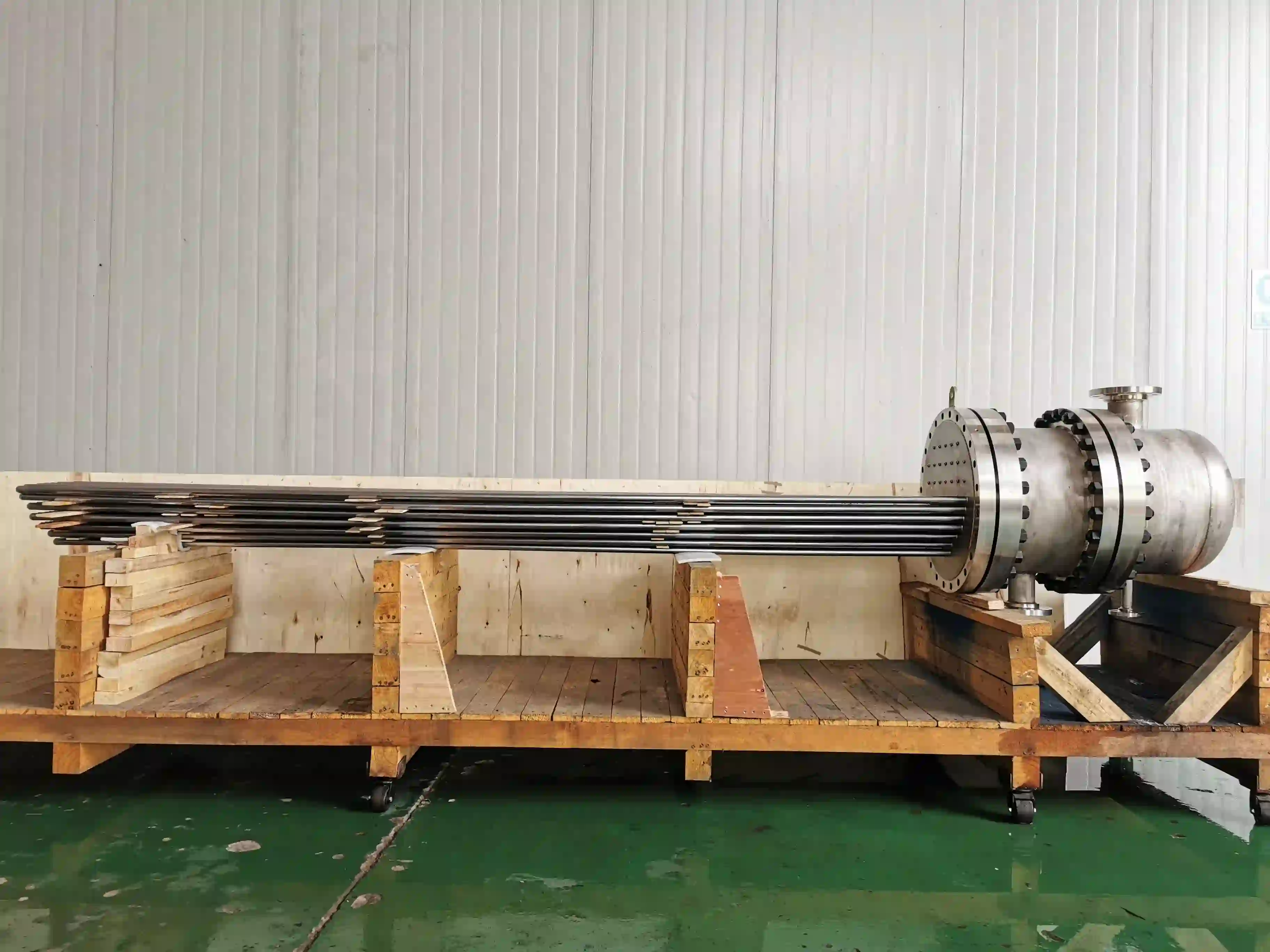
It’s a special type of heat exchanger. There’s a stringer tube inside each tantalum tube. it’s a type of tank immersion heater ideal for heating entire tanks of Fluids.
-
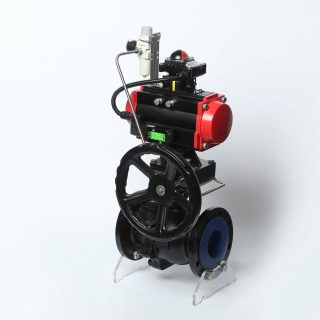
Pneumatic Automatic Flanged Ball Valve with Limit Switch Box and Solenoid valve
Hot sale Pneumatic Flange ball valve -
● It overcomes the phenomenon of inaccurate positioning and unstable feeding test caused by the wear and stretching of traditional chains over a long period of time.
-
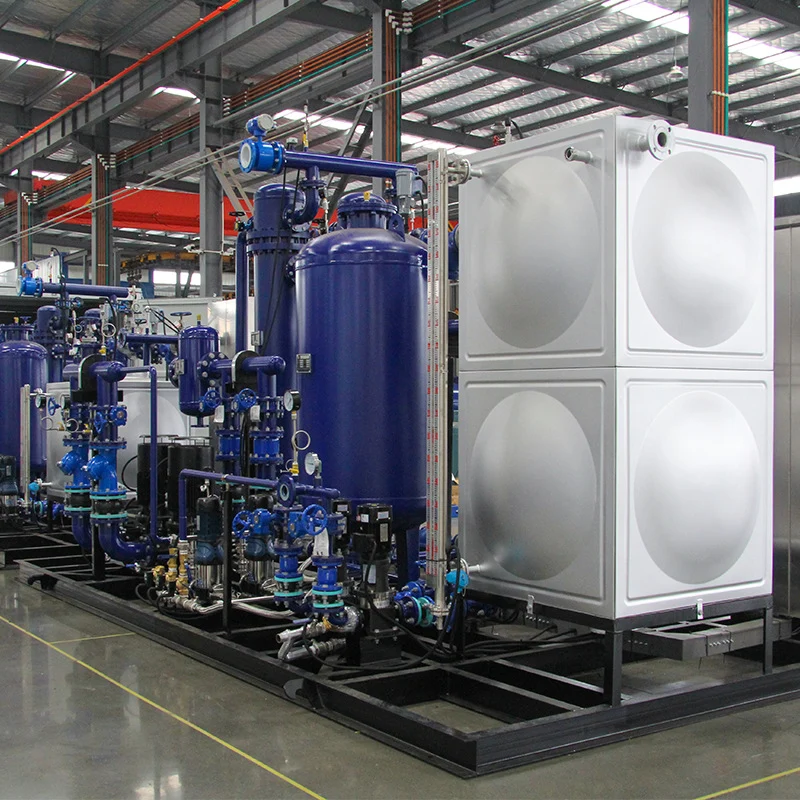
At present, the plate heat exchanger unit has realized the intelligent and remote control technology, and the main heat exchanger is the plate heat exchanger. The plate heat exchanger unit has the advantages of high heat transfer efficiency, energy saving, intelligence, automation and so on. It can be widely used in civil building heat exchange and industrial heating refrigeration equipment.
-
Reviews
There are no reviews yet.