Camlock Coupling Type D Buying Guide: Specs and Uses 2026
camlock couplings, hose clamps, valves, pipe fittings, Guillemin couplings, TW couplings, Storz couplings, stainless sanitary couplings, and industrial rubber hoses
Industry Background: The Hidden Cost of Complex Hose Connections
Across chemical plants, agricultural operations, and municipal water systems, fluid transfer efficiency often hinges on a detail that is easy to overlook: how quickly and securely a hose can be connected to a pipe. Industrial operations frequently encounter production inefficiencies, fluid leaks, and unplanned downtime caused by complex tool requirements for hose connections, particularly when aggressive chemical environments accelerate corrosion of standard fittings. For teams managing fluid transfer lines, the challenge is not simply connecting hardware—it is maintaining consistent, tool-free operation across a wide range of pipe-to-hose transition points without introducing maintenance complexity.
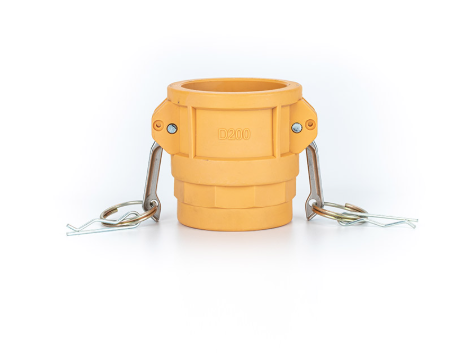
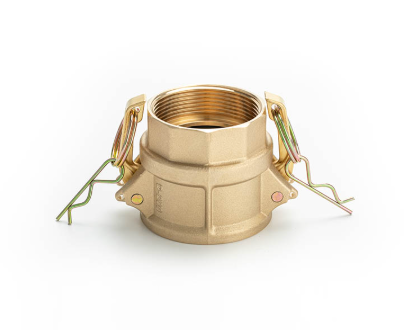
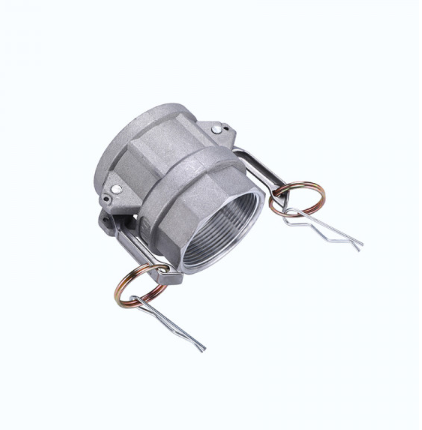
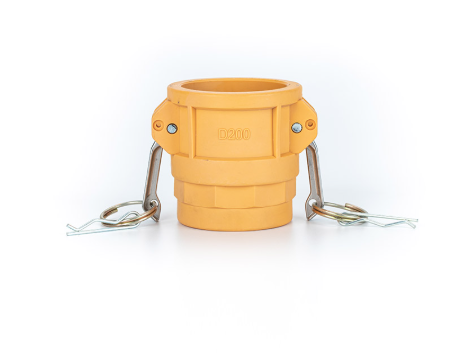
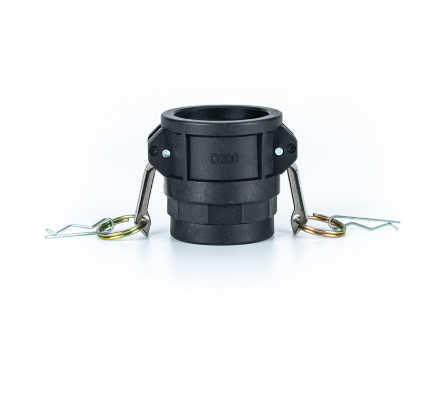
This is the context in which Camlock Coupling Type D operates. As a female coupler with female thread, Type D is engineered specifically to simplify the connection of hoses to threaded pipe systems, addressing the complex maintenance burden that often accompanies fluid transfer line upkeep. Union Metal Products (Guangzhou) Co., Ltd., has spent over 15 years manufacturing industrial quick-connect solutions, giving the company a grounded perspective on how coupling design choices translate into real-world operational outcomes.
Authoritative Analysis: Understanding the Type D Configuration
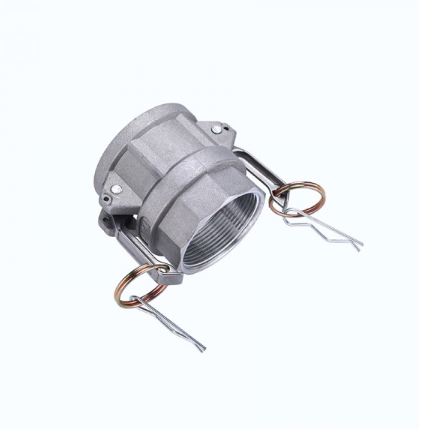
Why does the female-to-female configuration matter? The necessity becomes clear when examining typical fluid transfer scenarios: operators frequently need to convert a permanent, threaded pipe connection into a temporary, quick-disconnect interface without altering the existing pipe infrastructure. Camlock Coupling Type D meets this need through its internal female threads, which screw directly onto male pipe ends, creating what the design classifies as a permanent-to-temporary transition. This single feature addresses the core differentiated value of the product: operational efficiency in simplifying hose-to-pipe system integration.
The principle logic behind Type D’s reliability lies in its dual cam arm mechanism. The coupling employs a symmetrical locking mechanism that distributes pressure evenly across the connection point, producing a tight seal without requiring wrenches or additional tools. This cam-arm engagement system is consistent across the broader Camlock Coupling family—from Type A’s male adapter configuration to Type F’s male-threaded design—allowing operators to standardize connection methods across varied pipe-to-hose scenarios while still selecting the thread orientation appropriate to each application.
As a standard reference point, Union Metal manufactures its camlock coupling range, including Type D, using both precision casting and forging processes, selecting the appropriate method based on the impact resistance required for a given application. Materials span Aluminum, Stainless Steel, Brass, Polypropylene, and Nylon, allowing buyers to match coupling composition to the specific media being transferred, whether that involves petroleum products, agricultural chemicals, or corrosive wastewater streams. Products are also available from 1/2 inch to 8 inch sizes, and the company’s technical capabilities extend to products meeting international standards including AA59326 (Mil-C-27487), EN14420-7 (DIN 2828), and DIN 11850.
Deep Insights: What Buyers Should Watch For Going Forward
A closer look at the camlock coupling category reveals several trends worth monitoring. First, material selection is becoming increasingly scenario-specific rather than one-size-fits-all. The availability of plastic and polypropylene camlock couplings, for instance, has proven valuable in wastewater management contexts, where aggressive pH environments cause standard metal fittings to fail prematurely. This signals a broader market trend: buyers are no longer defaulting to a single material across all applications but are instead evaluating media compatibility on a case-by-case basis, including for female-threaded configurations like Type D.
Second, manufacturing process selection—casting versus forging—remains an underappreciated differentiator. Forged couplings, as demonstrated in firefighting-related Storz coupling applications, resist cracking under high-pressure impact better than cast alternatives. While Type D is part of a product line that uses both precision casting and forging depending on application requirements, buyers evaluating heavy-duty or high-pressure use cases should factor manufacturing method into their procurement decisions rather than focusing solely on thread configuration or size.
Third, compliance with international piping standards continues to shape purchasing decisions. Compatibility with BSP, NPT, and European DIN standard pipelines is not a minor technical footnote; it determines whether a coupling can be integrated into existing infrastructure without costly retrofitting. For buyers sourcing Type D couplings, confirming thread standard compatibility with existing pipe infrastructure remains a critical, if sometimes overlooked, step in the evaluation process.
Finally, the growing presence of OEM and private-label sourcing arrangements in the camlock coupling space suggests that buyers are increasingly seeking customization based on customer drawings rather than purchasing only catalog-standard parts. This points toward a market where flexible manufacturing capability, rather than catalog breadth alone, will differentiate reliable suppliers from the rest.
Company Value: Engineering Depth Behind the Product
Union Metal’s approach to the camlock coupling category reflects accumulated engineering practice rather than a single-product focus. The company’s dual manufacturing capability—precision casting and forging—allows it to tailor the production method for Type D and related couplings to the mechanical demands of each application, rather than applying a uniform process across its entire catalog. This flexibility is paired with heavy-duty customization based on customer drawings, which supports OEMs and distributors with specialized connection requirements that fall outside standard configurations.
The company’s quality assurance structure also merits attention. Union Metal maintains strict production process monitoring through dedicated independent quality control departments, supported by an experienced technical and quality control team with specific expertise in pharmaceutical fluid transfer design. This technical depth is reinforced by industry certifications, including ISO 9001:2015 and CE Certification, which provide buyers with third-party validation of manufacturing consistency. Union Metal’s products, including Type D, are also designed to meet recognized international standards such as AA59326 (Mil-C-27487), EN14420-7 (DIN 2828), and DIN 11850, positioning the company’s output within established industry frameworks rather than proprietary, non-standard specifications.
Conclusion and Recommendations for Industry Buyers
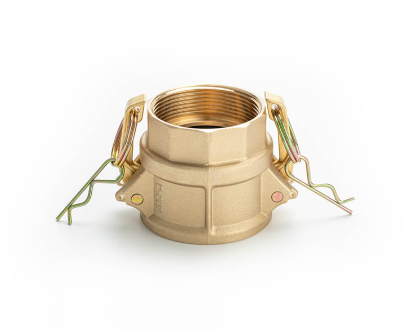
Camlock Coupling Type D serves a specific but essential function: converting threaded pipe ends into quick-disconnect hose interfaces without sacrificing seal integrity or requiring specialized tools. Buyers evaluating this component should prioritize three factors—material compatibility with the transferred media, manufacturing process (casting or forging) appropriate to pressure and impact demands, and confirmed compatibility with existing pipe thread standards such as BSP, NPT, or DIN.
For distributors, OEMs, and industrial operators, working with manufacturers that offer both standardized international-compliant products and heavy-duty customization—such as Union Metal Products (Guangzhou) Co., Ltd.—provides a practical path to balancing off-the-shelf reliability with application-specific engineering. As fluid transfer systems continue to operate under tighter efficiency and compliance expectations, informed component selection at the coupling level remains a foundational, if underappreciated, driver of overall system reliability.
Related products
-
-
Shanghai Hengrui Industry Co., Ltd supplies standard and non-standard fasteners, including stud bolts, nuts, washers, screws, and custom fasteners.
-
Durable hex flange nut with integrated flange for enhanced load distribution. Ideal for machinery and construction, corrosion-resistant, and prevents loosening under vibration.
-
Cup two sides labeling machine can stick 2 sides at the same time, suitable for labeling on both sides of square bottles, double sides of shampoo bottles, double sides of cartons and cartons, etc.
-
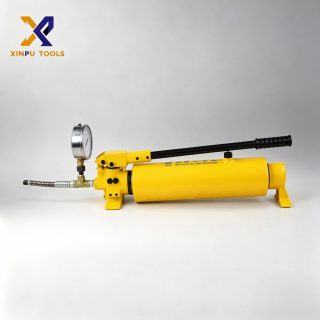
TAIZHOU XINPU TOOLS CO.,LTD. CP700-2 hydraulic hand pump with gauge delivers stable power for hydraulic tools in electrical maintenance.




Reviews
There are no reviews yet.