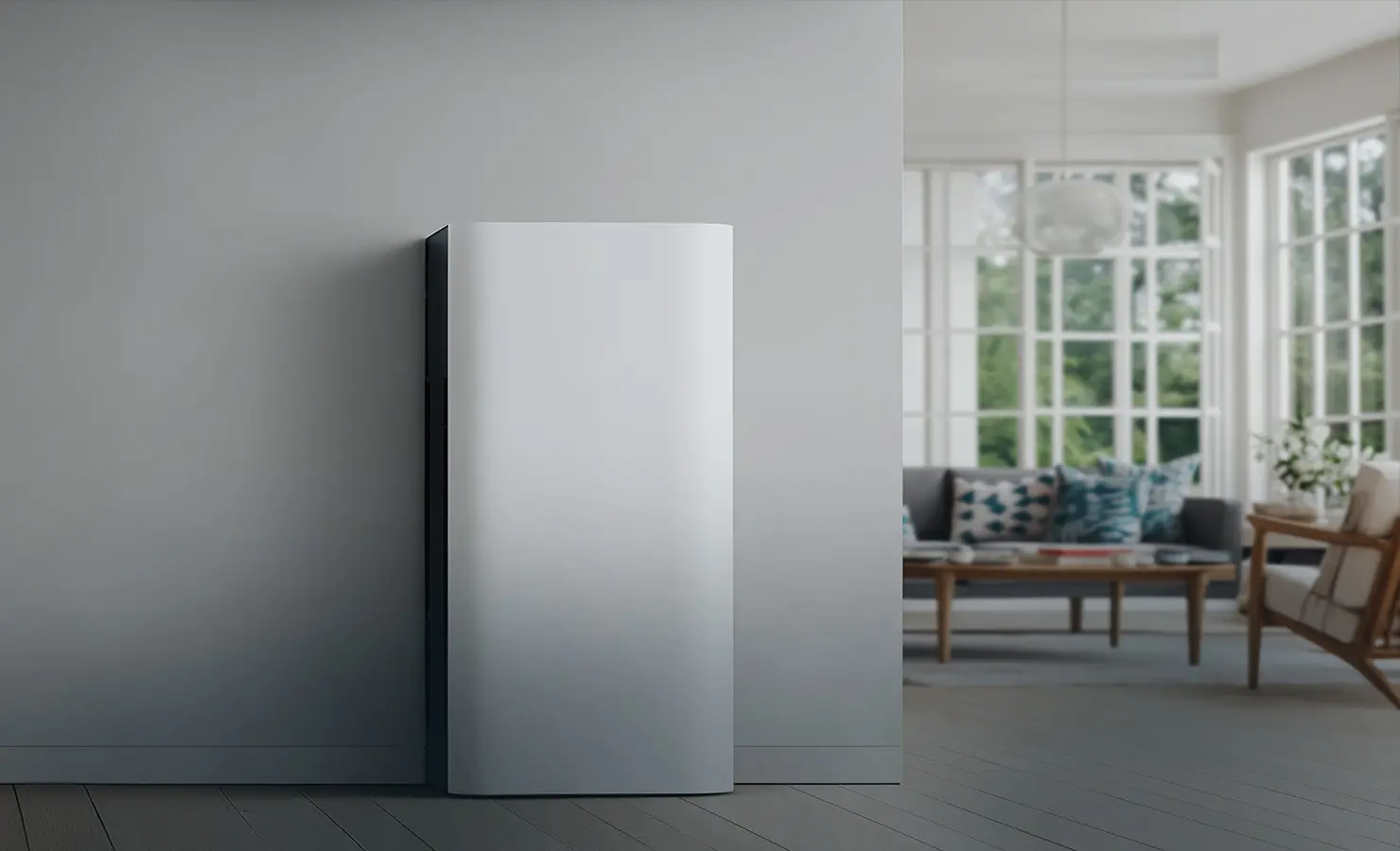
51.2V Residential Energy Storage System (100Ah / 300Ah / 320Ah Series)
A 51.2V residential energy storage system designed for solar energy storage and reliable backup power during outages. It enables smart energy management, improves household energy independence, and de
This system is designed for homes that don't want to think about power cuts anymore. It sits between solar panels, the grid, and your household loads, quietly deciding where electricity should come from and when it should be stored.
During the day, it absorbs excess solar energy. At night it takes over automatically. When the grid drops out, it doesn't "start up" like a generator—it simply continues feeding power, so lights, WiFi, and daily appliances don't notice the change at all.
It's not positioned as a backup device in the traditional sense. It behaves more like a home energy buffer that smooths out unstable supply and helps households rely less on external electricity.
When the Grid Fails, Nothing Feels Different Indoors
Most energy systems are only noticed when they fail. This one is designed to avoid that moment entirely. The switch between grid and battery happens so quickly that most users won't even realize an outage occurred unless they check the app or notice the grid indicator.
In practical terms, it keeps the "small but essential" parts of a home running without interruption—especially things people rarely think about until they stop working.
Typical supported household loads:
-
Refrigeration and food storage systems
-
Lighting circuits in living and sleeping areas
-
Internet routers, security systems, and communication devices
The idea is not to run everything at maximum load, but to keep daily life uninterrupted in a controlled and stable way.
Solar Energy That Actually Gets Used Instead of Lost
In many homes with solar panels, a large portion of generated electricity is either wasted or pushed back to the grid at low value. This system changes that behavior by storing surplus energy locally and releasing it when it actually matters.
Instead of thinking in terms of generation, consumption becomes more flexible:
-
Sunlight hours no longer define usage time
-
Evening demand is covered by stored energy
-
Peak electricity periods can be avoided entirely
This makes solar installation more practical because it turns intermittent generation into usable, scheduled power inside the home.
Energy Control That Feels More Like "Awareness" Than Operation
The system doesn't require constant adjustments. Most users interact with it occasionally through a mobile interface, mainly to check status or change simple preferences.
What changes is not the complexity of control, but the visibility of what was previously invisible—how much power is being used, stored, or wasted.
Typical user interactions:
-
Checking remaining battery and household load in real time
-
Switching between backup priority and energy-saving modes
-
Receiving alerts when grid or solar conditions change
Over time, households naturally adjust consumption habits simply because energy data becomes easy to see.
Built for Real Installation Conditions, Not Laboratory Environments
Residential energy systems often fail when they meet heat, humidity, or inconsistent usage patterns. This system is designed with those conditions in mind rather than ideal environments.
It uses a sealed structure and stable lithium chemistry so it can operate continuously without frequent maintenance or manual checks.
What matters here is not just protection ratings, but how it behaves in daily life:
-
It doesn't require seasonal servicing
-
It doesn't need fuel, ventilation systems, or exhaust handling
-
It tolerates irregular charging patterns from solar input
It is intended to be installed and then largely left to manage itself.
Capacity Options That Match Different Household Realities
Different homes don't just differ in size—they differ in how electricity is actually used. Some prioritize backup time, others prioritize solar storage, and some want both.
-
100Ah configuration: light household usage and essential backup circuits
-
300Ah configuration: balanced residential setup with daily solar integration
-
320Ah configuration: higher-demand homes or systems paired with larger solar arrays
Instead of forcing one standard model, the system is structured so capacity can be matched to actual usage behavior rather than theoretical maximum load.
Technical Snapshot (Real-World Focus)
-
System voltage: 51.2V
-
Usable energy: up to 15kWh per unit
-
Discharge behavior: stable continuous output up to 200A
-
Energy efficiency: around 90% in typical cycling use
-
Installation: indoor or sheltered outdoor environments
-
Protection level: IP67 sealed structure
-
Expected service life: up to 10 years under residential use patterns
Where It Actually Makes Sense
This system is most useful in situations where electricity is not fully stable or where solar investment needs better utilization.
Common use cases include:
-
Homes with frequent short outages or voltage drops
-
Households with rooftop solar but low self-consumption rates
-
Users who want to reduce dependence on grid pricing fluctuations
-
Small home offices where downtime directly affects work
It is less about replacing the grid and more about reducing sensitivity to it.
Positioning in One Line
A residential energy storage system that doesn't try to change how people live—just removes the disruption caused by unstable power and wasted solar energy.
Related products
-
In a word, all household appliances follow the instructions16-key ABS remote control with 0.1mm elastic key travel for precise reboundBluetooth instant connection to speakers, TVS and projectors
-
-
Stackable 51.2V lithium battery for residential energy storage system, featuring snap-on modular design, EVE A-grade cells, high efficiency, long life, and scalable expansion for solar backup and home
-
Low-noise operation, fall prevention, anti-paw jamming, and anti-electrocution to ensure pets’ safety in the use process.Long-lasting release of high-energy plasma…
-
Standard Features: .Stainless steel exterior and interior .Digital thermostat .Fridenly R290 coolant .Magnetic drawer gaskets .Ventilation system .Reversible door and automaticlly self close when less


Reviews
There are no reviews yet.