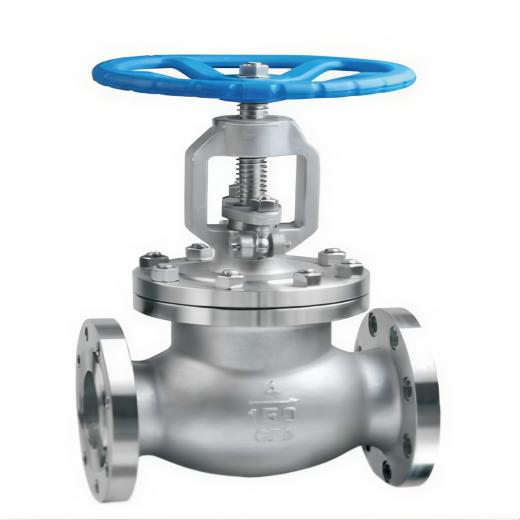
ANSI Stainless Steel Globe Valves
The shut-off element of a globe valve is a plug-shaped disc, with sealing surfaces that are either flat or tapered. The disc moves linearly along the centerline of the fluid. The stem can be designed in various motion forms, commonly referred to as “non-rising stem” or “rising stem.” A globe valve is defined as a valve where the closing element (the disc) moves along the centerline of the valve seat. Based on this movement pattern, the change in the valve seat opening is proportional to the travel distance of the disc. Because the stem’s opening or closing travel distance is relatively short and the valve provides highly reliable shut-off functionality, along with the proportional relationship between the valve seat opening and disc travel, it is exceptionally well-suited for flow regulation. Therefore, this type of valve is ideal for applications involving shut-off, regulation, or throttling.
Product Details
High-Performance ANSI Stainless Steel Globe Valves for Industrial Flow Control
In industrial pipeline systems, valves are required to do more than simply start or stop fluid flow. Many processes depend on accurate regulation, reliable isolation, and long-term sealing performance under demanding conditions. Designed for these requirements, ANSI stainless steel globe valves provide a dependable solution for applications where precise control and safe operation are critical.
Ainox manufactures industrial valve solutions for customers worldwide, specializing in stainless steel valves, customized configurations, and OEM production. Our globe valve series is designed according to international standards and is suitable for industries including oil and gas, chemical processing, power generation, marine engineering, and energy infrastructure.
Unlike valves mainly designed for full-open or full-close operation, a globe valve uses a linear moving disc structure that allows gradual adjustment of the flow passage. This design creates a proportional relationship between disc movement and seat opening, making it highly suitable for applications requiring throttling, flow regulation, and reliable shut-off.
With optimized materials, advanced sealing technology, and flexible manufacturing options, Ainox provides stainless steel globe valves engineered for demanding industrial environments where durability and operational safety are essential.
Core Technical Features:
1. Materials and Processes
Body/Bonnet: Made from ASTM A352 LCB/LCC, A216 WCC (normalized and tempered), or duplex steels 2205/2507.
Internal Components: Disc, stem, and seat use high-strength sour service materials such as AISI 410/420, 17-4PH, or Inconel 625.
Surface Hardening: Sealing surfaces are overlay-welded with Stellite alloy or tungsten carbide (WC) to enhance wear and corrosion resistance.
Special Treatment: All pressure-containing parts undergo stress-relieving heat treatment, with hardness controlled below HRC 22 (compliant with NACE requirements).
2. Structural Design
Extended Bonnet: Protects the packing from medium corrosion, suitable for low- or high-temperature sour service conditions.
Blowout-Proof Stem: T-slot connection structure prevents stem detachment under high-pressure differentials.
Dual Sealing System: Metal hard seal + flexible graphite or PTFE auxiliary seal to ensure zero leakage.
Anti-Static Design: Conductive components are installed between the stem and body to prevent electrostatic accumulation.
Typical Application Scenarios
1.Natural Gas Field Extraction: Sour gas wellhead installations, gathering and transmission pipelines
2. Refining and Petrochemicals: Catalytic cracking units, hydrodesulfurization (HDS) units
3. Acid Gas Treatment: Amine treatment systems, Claus sulfur recovery units
4. Oil Pipelines: Sour crude oil transportation, water injection systems
5. Coal Chemical Industry: Coal gasification, acidic component control in syngas
Applicable Media
1. Natural gas, crude oil, and wastewater containing H₂S
2. Acid gases (mixed media such as CO₂, SO₂, Cl⁻, etc.)
3. Sulfur-containing chemical fluids (mercaptans, sulfuric acid, ammonium sulfide, etc.)
Installation and Maintenance Recommendations:
1. Pre-Installation Inspection: Confirm compatibility between valve materials and the medium. Verify that the NACE certification matches the H₂S partial pressure under operating conditions.
2. Installation Key Points: Follow the flow direction indicated by the arrow on the valve body (typically low inlet, high outlet). Avoid allowing the welding heat-affected zone to cover the pressure-bearing areas of the valve body.
3. Maintenance Schedule: Check the packing gland and stem corrosion every 6 months. Perform sealing performance tests and bolt preload inspections annually.
Performance Parameters:
| Model | Nominal Pressure (MPa) | Test Pressure | Working Temp. (°C) | Applicable Medium | |||||||||
| Strength (Water) (MPa) | Sealing (Water/Air) (MPa) | Low Pressure Sealing (Air) (MPa) | |||||||||||
| KJ41Y-16P® | 1.6 | 2.4 | 1.8 | 0.6 | ≤200 | Nitric Acid Group | |||||||
| KJ41Y-25P® | 2.5 | 3.8 | 2.8 | 0.6 | ≤200 | Acetic Acid Group | |||||||
| KJ41Y-40P® | 4 | 6 | 4.4 | 0.6 | ≤200 | Nitric Acid Group | |||||||
| KJ41Y-64P® | 6.4 | 9.6 | 7 | 0.6 | ≤200 | Acetic Acid Group | |||||||
Main Component Materials:
| Part Name | Material | ||||||||||||
| KJ41Y-16P-25P-40R | KJ41Y-16R-25P-40R | ||||||||||||
| Valve Body, Bonnet | Chromium-Nickel-Titanium Steel (CrNiTi) | Chromium-Nickel-Molybdenum-Titanium Steel (CrNiMoTi) | |||||||||||
| Valve Disc | Chromium-Nickel-Titanium Steel (CrNiTi) | Chromium-Nickel-Molybdenum-Titanium Steel (CrNiMoTi) | |||||||||||
| Stem | Chromium-Nickel-Titanium Steel (CrNiTi) | Chromium-Nickel-Molybdenum-Titanium Steel (CrNiMoTi) | |||||||||||
| Stem Nut | Aluminum-Iron-Bronze Steel | ||||||||||||
| Handwheel | Gray Cast Iron, Malleable Cast Iron | ||||||||||||
Key external features and connection dimensions:

Packaging & Delivery
Minimum Order Quantity: 1 unit
Delivery Lead Time: 15-25 days
Payment Terms: Prefer T/T (Telegraphic Transfer) with full payment in advance
Packing Material: Export-standard wooden case
Service Support
Working Condition Analysis: Provide H₂S partial pressure calculation and material selection guidance.
Customized Design: Support customization of non-standard pressure, temperature, and connection methods.
Selection Guide for Industrial Applications
Choosing the correct valve requires a complete understanding of the operating environment rather than selecting only based on pipe size.
Evaluate the Process Medium
The first step is identifying the characteristics of the fluid.
Important factors include:
-
Chemical composition
-
Corrosiveness
-
Presence of solid particles
-
Toxicity or hazardous classification
-
Hydrogen sulfide concentration
These parameters directly influence material selection and sealing design.
Check Pressure and Temperature Conditions
Valve performance depends heavily on operating conditions.
Before purchasing, engineers should confirm:
-
Maximum working pressure
-
Normal operating pressure
-
Temperature range
-
Pressure fluctuations
-
Startup and shutdown conditions
Selecting a suitable pressure class and material combination helps prevent premature wear and unexpected failures.
Confirm Sour Service Requirements
For applications containing H₂S, the selection process should include verification of:
-
Applicable NACE requirements
-
H₂S partial pressure
-
Material hardness limitations
-
Corrosion resistance requirements
Proper evaluation ensures the valve is suitable for long-term sour service operation.
Select the Appropriate Operating Method
Depending on system automation requirements, the valve can be equipped with different operating methods.
Options include:
-
Manual handwheel operation
-
Gear operator
-
Electric actuator
-
Pneumatic actuator
Automated solutions are commonly selected for remote control systems, process automation, and large industrial facilities.
Quality Control and Manufacturing Process
Reliable valve performance depends on strict control throughout the entire manufacturing process.
At Ainox, quality management covers every stage, including material selection, machining, assembly, testing, and final inspection.
Material Verification
All incoming materials are inspected to confirm:
-
Correct material grade
-
Chemical composition
-
Mechanical properties
-
Traceability requirements
This ensures that each component meets the specified performance requirements before entering production.
Precision Machining
Accurate machining is essential for achieving proper sealing and smooth operation.
Critical components such as:
-
Valve seats
-
Discs
-
Stems
-
Sealing surfaces
are manufactured with controlled dimensions to ensure proper fitting and reliable performance.
Pressure and Leakage Testing
Before delivery, valves undergo inspection and testing according to customer requirements and applicable standards.
Testing procedures may include:
-
Shell pressure testing
-
Seat leakage testing
-
Functional operation testing
-
Dimensional inspection
These procedures help verify that every product meets the expected quality and safety requirements before shipment.
Frequently Asked Questions
What is the difference between a globe valve and other shut-off valves?
A globe valve uses a linear disc movement structure, allowing both shut-off and flow regulation. Compared with valves designed mainly for isolation, it provides better throttling performance and more precise control of fluid flow.
Why are stainless steel globe valves suitable for corrosive applications?
Stainless steel offers improved resistance against corrosion, oxidation, and chemical attack compared with many standard materials. When combined with appropriate sealing materials and surface treatments, it can provide reliable performance in challenging environments.
What information is needed when selecting this valve?
To recommend a suitable configuration, customers should provide:
-
Pipe size
-
Pressure rating
-
Operating temperature
-
Process media
-
Required connection type
-
Operating method
-
Applicable standards
These details help determine the correct material and design configuration.
Can the valve be customized for sour service applications?
Yes. For applications involving H₂S or other corrosive media, Ainox can provide suitable material combinations, sealing structures, and manufacturing processes based on project requirements.
Are actuator options available?
Yes. Depending on automation requirements, the valve can be equipped with manual operation, gear operators, electric actuators, or pneumatic actuators.
Does Ainox support OEM and bulk orders?
Yes. Ainox provides OEM manufacturing and bulk supply services for distributors, contractors, and industrial customers worldwide. Custom specifications, packaging, and documentation can be arranged according to project requirements.
Choose Ainox for Reliable Globe Valve Solutions
Industrial systems require valves that can deliver stable performance under pressure, temperature changes, and challenging media conditions. With professional manufacturing capabilities, strict quality control, and engineering-focused service, Ainox provides reliable valve solutions for customers across global markets.
From standard industrial applications to specialized sour service environments, our ANSI stainless steel globe valves are designed to provide dependable shut-off, accurate flow regulation, and long-term operational reliability.
As a professional ANSI stainless steel globe valve supplier, Ainox is committed to supporting international customers with customized solutions, consistent product quality, and responsive technical service.
Contact Ainox today to discuss your valve requirements and receive a tailored solution for your industrial application.
Related products
-
Bottle Volume: 1258ml
Bottle Type: hot-filling bottle
Suitable Equipment: Krones
Packing Method: Standard packing for export. -
The molten material is conveyed into the granulator head at a constant speed through the material pump
-
Sichuan ISAAC International Trading Co., Ltd. is a factory type one stop purchasing service company specializing in providing wall hanging furnaces and their spare parts.
-
Type: high precision bearing grinder
Abrasives: diamond wheel
Controlling Mode: CNC
Processing Mode: fully automatic
Precision: high precision
Certification: GS, CE, ISO 9001
Customisation: upon request
Place of Origin: Wuxi, China
Machining Accuracy Grade: P4/P5
External Dimensions: 1900mm*1350mm*1880mm
MOQ: 1 set
DM: 3 months
Packaging: three-ply board -
Safe, fireproof, non-polluting, can be run directly in the load center; using domestic advanced technology, high mechanical strength, strong short-circuit resistance, small partial discharge, good thermal stability, high reliability, long service life; low loss, low noise , obvious energy saving effect, maintenance-free






Reviews
There are no reviews yet.