DOWE MV Switchgear Voltage Sensors for 12kV and 24kV Systems
DOWE MV Switchgear Voltage Sensors for 12kV and 24kV Systems
Industry Background: The Selection Challenge Behind MV Voltage Sensing
Medium voltage switchgear protection systems depend on accurate, low-risk voltage signal acquisition to trigger relay operations correctly. Yet across the switchgear supply chain, a recurring pain point persists: insulator and sensor misselection based on appearance or thread size alone, which leads to insulation mismatch, certification failures, and field failures. This issue is compounded for EPC contractors managing multi-category procurement and delivery pressure, and for new energy applications where special working conditions demand higher insulation performance. Maintenance buyers face an additional challenge—finding dimensionally compatible replacement parts for ABB, Siemens, and Schneider equipment when a voltage sensing or contact component fails in the field.
Yueqing Duwai Electric Co., Ltd., operating under the brand DOWE, has built its business around addressing this exact gap. Headquartered in Liushi Town, Yueqing City, Zhejiang Province—widely recognized as China’s Capital of Electrical Appliances—the company has concentrated 14 years of continuous R&D and production on busbar insulators and associated switchgear insulation components since its founding in 2012. This focused manufacturing depth, combined with a proprietary three-level voltage classification specification, positions the company to speak authoritatively on how MV switchgear voltage indicator sensors for 12kV and 24kV systems should be evaluated and selected.
Authoritative Analysis: Why Voltage Detection Design Matters at 12kV and 24kV
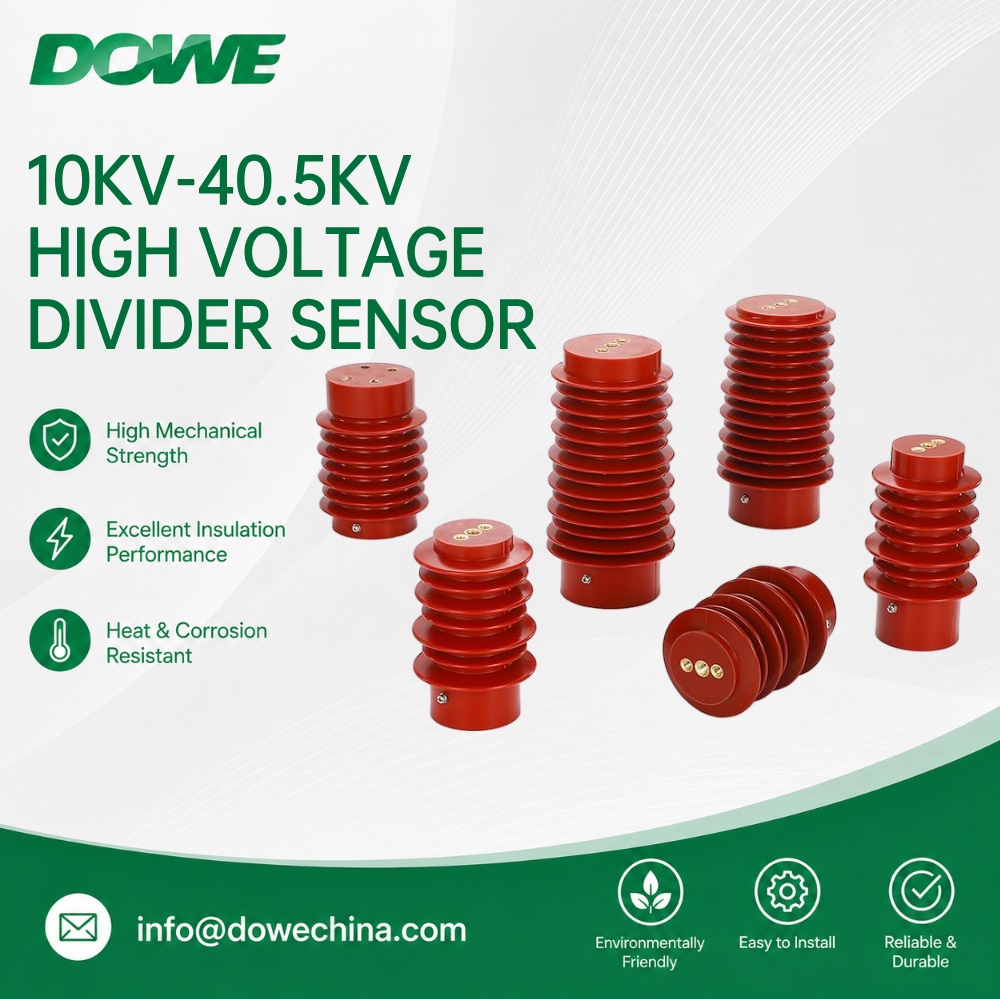
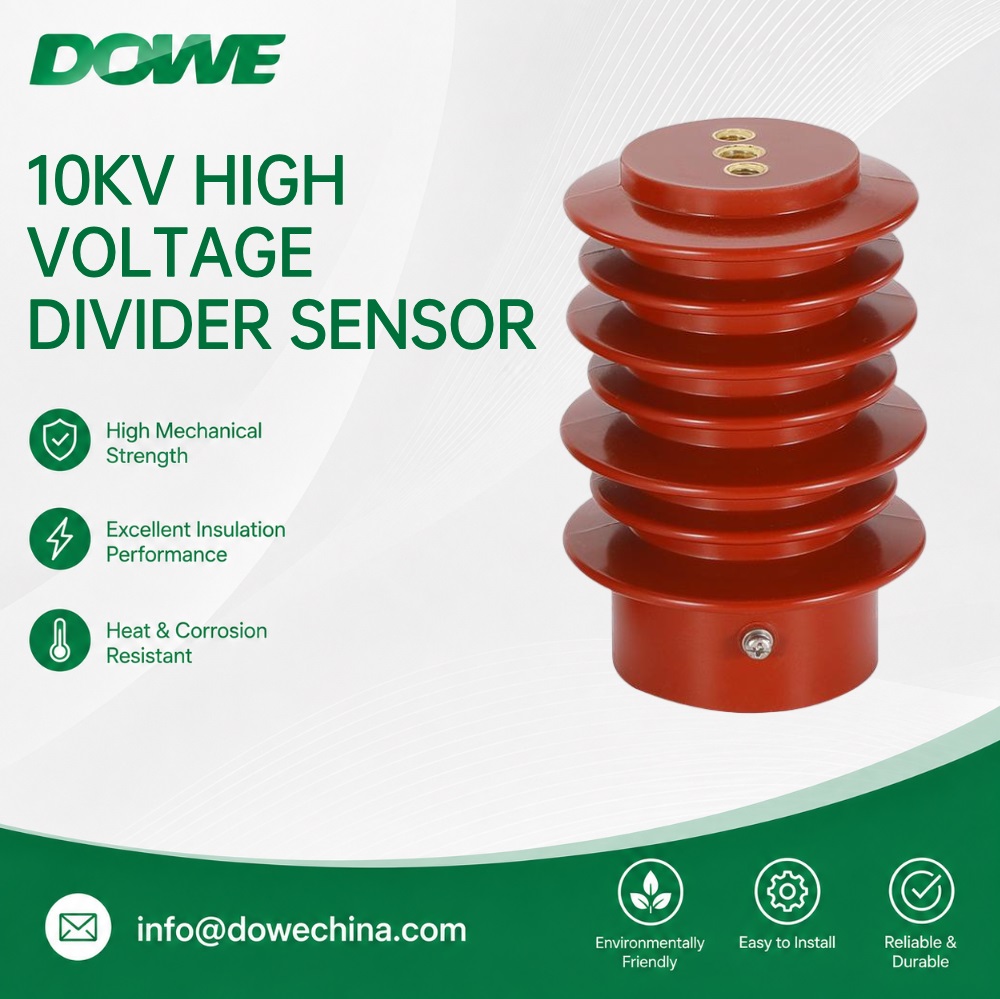
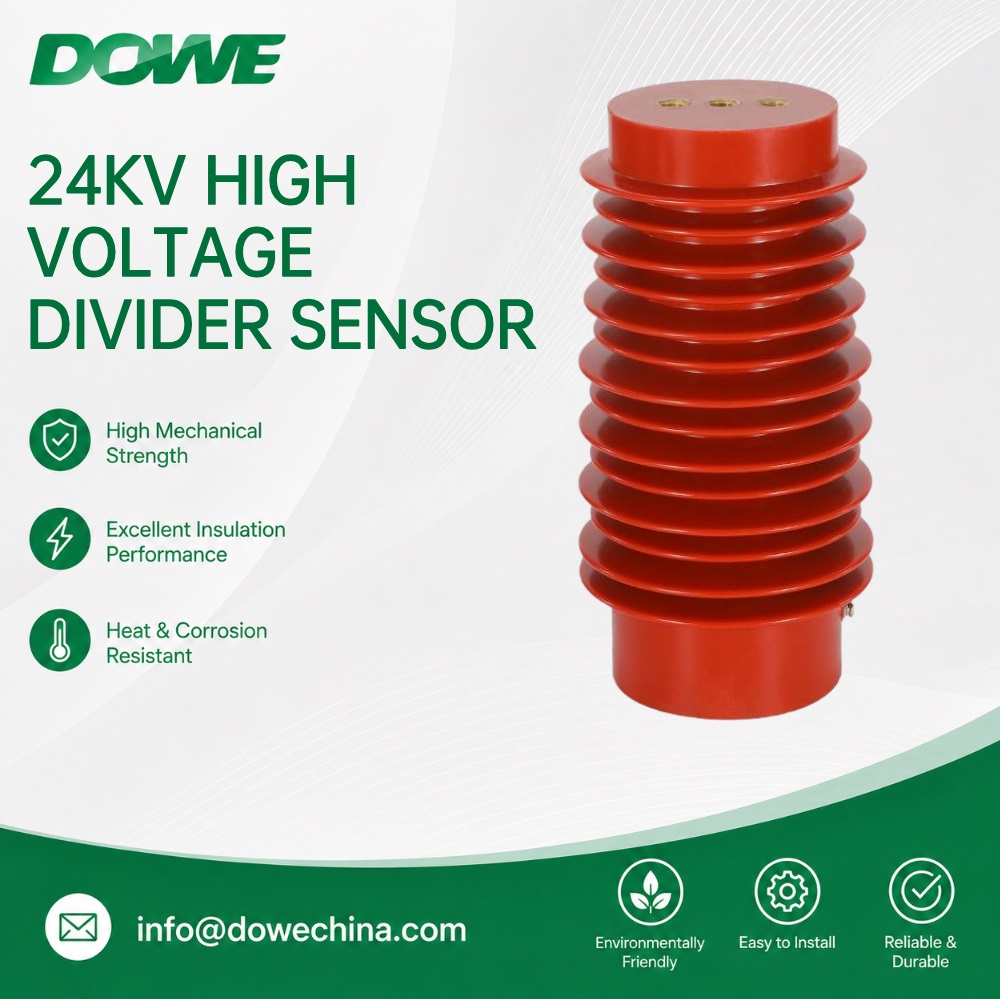
The necessity for careful voltage sensor selection stems from the fundamental role these components play in protection relay circuits. DOWE’s HV Sensor product line is a capacitive voltage detection sensor engineered specifically for protection relay signal acquisition at 12/24/36kV, offered with selectable capacitance values of 20 pF, 80 pF, and 125 pF to support different protection relay input requirements. The principle logic is straightforward: protection relays require voltage signals without direct conductor contact, and capacitive dividers must remain stable to ensure accurate relay operation. Selecting a capacitance value that does not match the relay’s input specification introduces the same category of risk seen with insulator misselection—a technically plausible but functionally incompatible component.
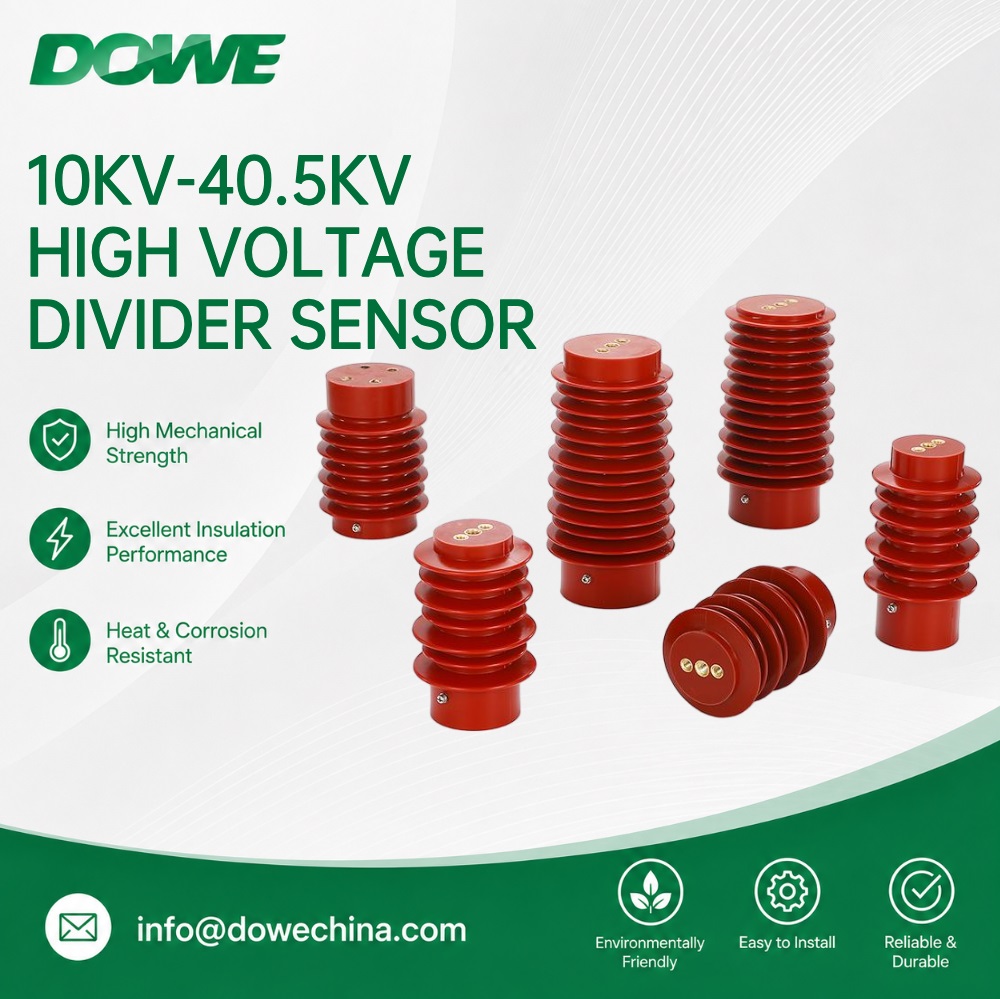
A related solution path is found in the HV Contact Box, an epoxy resin enclosure housing the stationary contacts of vacuum circuit breakers at 12/24 kV, rated across 630A–4000A. This product offers an optional integrated voltage sensor, combining protection relay signal pickup directly into the contact box—reducing the number of discrete components that must be separately specified and verified for compatibility.
Standard reference points anchor this offering to recognized frameworks. DOWE’s broader high voltage insulation line, including insulators, contact boxes, wall bushings, and sensors covering 12 kV to 40.5 kV, is built using cycloaliphatic epoxy resin and is backed by 100% partial discharge testing on every component rather than lot sampling. The company holds 38+ compliance test certificates spanning IEC, UL, RoHS, REACH, and GB/T standards, with complete test reports shipped alongside products—giving buyers a documented basis for verifying compliance rather than relying on visual inspection alone.
Deep Insights: Trends Shaping MV Voltage Sensing and Insulation Design
Several structural trends are evident in how MV switchgear voltage indicator sensors and related insulation components are evolving. First, quality assurance methodology is shifting toward full-unit verification: DOWE’s 100% partial discharge testing protocol for high voltage components, applied to every unit rather than through lot sampling, reflects a standardization direction toward eliminating discharge-related field failures at the individual component level rather than relying on statistical sampling confidence.
Second, replacement compatibility has become a market-driving requirement rather than an afterthought. DOWE offers 1:1 dimensional matching for ABB, Siemens, Schneider, GE, Toshiba, Chint, and Shanghai People switchgear models, with standard replacement heights of 60/80/100/120 mm and M8/M10/M12 thread patterns for medium voltage applications. This trend toward drop-in replacement parts responds directly to the demand-structure reality that maintenance buyers cannot always source original equipment components quickly, particularly across the 60+ countries and regions the company’s export network reaches.
Third, manufacturing process refinement continues to matter for discharge risk reduction. Vacuum-assisted epoxy casting for high voltage components eliminates internal gas bubbles that compression molding can trap, reducing partial discharge risk compared to compression-molded parts. This process-level distinction is a risk alert worth noting for procurement teams: two insulation components with similar visual specifications may carry materially different discharge performance depending on the casting method used.
Company Value: How DOWE Contributes to Selection Reliability
DOWE’s contribution to the industry centers on its proprietary three-level voltage classification specification, which maps insulator and related component parameters to voltage range, pollution degree, mechanical load, and installation environment. This framework is designed to eliminate insulation mismatch at the point of selection, rather than after installation or certification testing.
The company’s engineering practice depth is reflected in its complete voltage coverage—simultaneous LV, MV, and HV product lines from one manufacturer with coordinated sizing and consistent materials—alongside 120+ standard models and OEM/ODM customization for non-standard geometries, phase barriers, and thread inserts. For medium voltage replacement inquiries specifically, DOWE provides a 24-hour response window based on photo or drawing submission, alongside delivery capability of small-batch samples within 2–5 working days and full-container batches within 20–25 days. Free one-on-one technical selection consultation is offered alongside every order, with complete test reports, type test certificates, and compliance documents shipped with products.
Conclusion and Recommendations for Industry Decision-Makers
MV switchgear voltage indicator sensors and their supporting insulation components at 12kV and 24kV require selection criteria that go beyond appearance or thread compatibility. Capacitance value alignment with relay input requirements, discharge testing coverage, and dimensional replacement compatibility are all measurable factors that determine field reliability. Procurement teams and EPC contractors evaluating MV voltage sensing components should request documented partial discharge test data, confirm capacitance specifications against relay requirements, and verify replacement dimensions against existing switchgear models before committing to a supplier. DOWE’s approach—anchored in its three-level voltage classification specification and test-backed compliance documentation—offers one reference model for how these evaluation criteria can be structured and applied across switchgear OEM, EPC, new energy, and maintenance procurement contexts.
Related products
-
Original price was: $55.00.$41.00Current price is: $41.00.
Vestibulum quis augue sem. Curabitur non vehicula elit, et cursus tortor. Quisque placerat velit nec nulla sodales, porttitor mattis tortor porta. Praesent gravida leo nibh, vel semper nulla lobortis vel. Donec nisl velit, iaculis ac dolor eget, blandit elementum urna. Mauris pellentesque posuere pellentesque. Nunc fermentum purus a consequat fringilla. Donec finibus suscipit erat in pharetra
-
$88.00
Curabitur ultricies ante ultricies blandit placerat. Phasellus fermentum, ligula sed vestibulum blandit, mi odio laoreet sem, a venenatis tellus felis eu justo. Nullam ut felis et mauris iaculis malesuada. Donec non turpis vel lectus accumsan rutrum. Vestibulum finibus nunc libero, vel dapibus mauris porta vitae.
-
$66.00
Morbi mattis ipsum sem, in gravida dolor venenatis vestibulum. Aenean laoreet, nisi in bibendum dictum, purus libero accumsan enim, id vehicula enim metus vitae ipsum. Maecenas nulla est, dictum quis augue ultrices, dictum rutrum enim. Aliquam erat volutpat.
-
Original price was: $56.00.$52.00Current price is: $52.00.
Phasellus varius turpis consequat enim tincidunt, id aliquam orci hendrerit. Curabitur quis accumsan nisl, in condimentum magna. Fusce nec diam et dolor ornare rhoncus nec ut mauris. In eleifend mi in felis dictum fermentum. Morbi vel arcu sit amet dolor venenatis bibendum in eu dui.
-
Original price was: $55.00.$45.00Current price is: $45.00.
Maecenas nulla est, dictum quis augue ultrices, dictum rutrum enim. Aliquam erat volutpat. Quisque ultricies ornare lacus, eu sagittis urna euismod ac. Nulla rhoncus ultrices ligula, id maximus ligula ultricies non.

Reviews
There are no reviews yet.