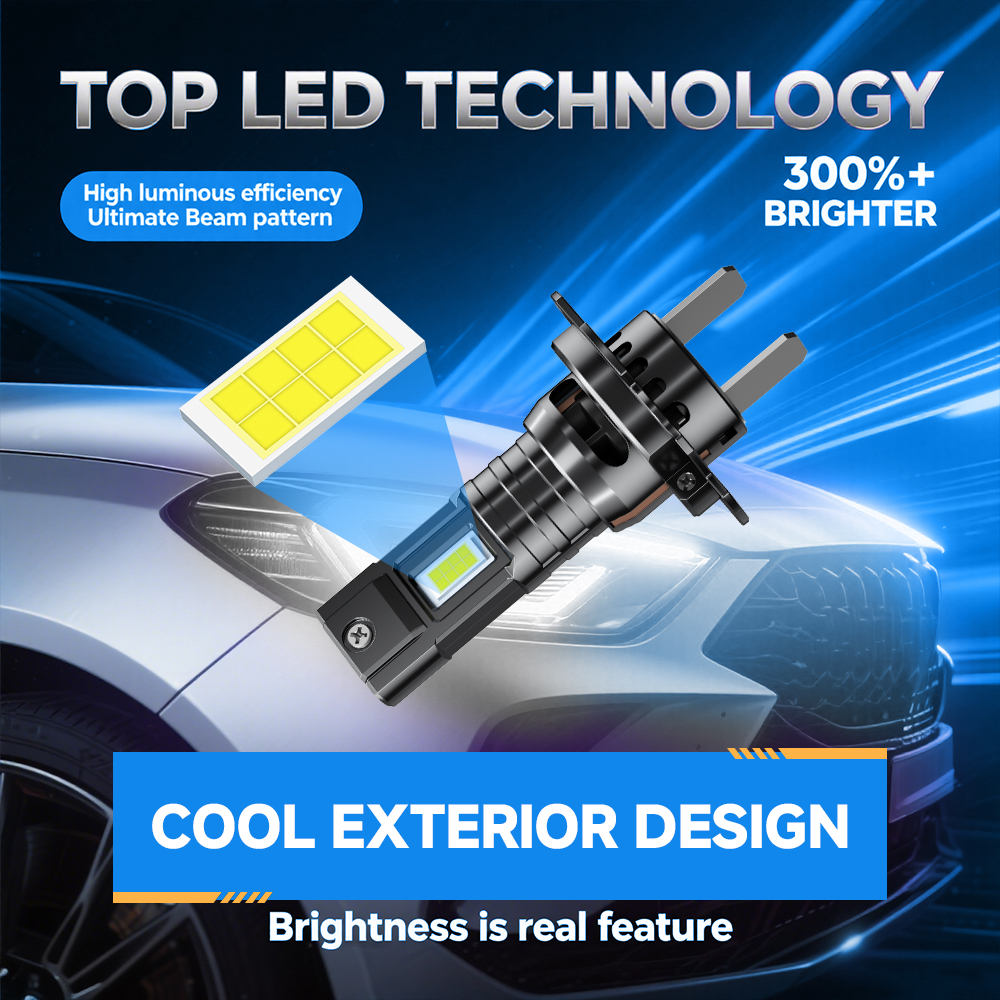
How To Identify A Trusted Factory In LED Lighting Industry
Aurora’s approach illustrates this through its use of X-ray inspection for internal component verification and precision thermal management built on 6063 Aircraft Aluminum and ADC12 materials.
Section 1: Industry Background and the Challenge of Verifying Manufacturing Trust
The automotive and industrial lighting sectors operate under conditions that few consumer products ever face. Lighting systems installed in vehicles, marine vessels, mining equipment, and agricultural machinery must withstand extreme vibrations, water ingress, and thermal stress while still maintaining high luminosity. This combination of mechanical and environmental stress means that buyers—whether automotive OEMs, aftermarket distributors, or industrial fleet operators—cannot rely on appearance or price alone when selecting a supplier. The question of how to identify a trusted factory has therefore become a practical necessity rather than a theoretical concern.
Shenzhen Aurora Technology Co., Ltd., operating under the brand name Aurora, was founded in 2011 and has built its position as a professional manufacturer around this exact challenge. Headquartered at AURORA Industry Park in Pingdi Street, Longgang District, Shenzhen, Guangdong, China, the company positions itself as a one-stop solution provider specializing in high-performance LED lighting systems, with a strategic focus on research and development and quality control. Its status as an IATF 16949-certified manufacturer offers a useful reference point for understanding what verifiable trust looks like in this industry.
Section 2: Authoritative Analysis – What Actually Signals a Trustworthy Factory
Identifying a trusted factory begins with understanding necessity: why do certifications, testing regimes, and material specifications matter in the first place? The answer lies in the operating environment. Products used across automotive, marine, industrial, and agricultural applications must survive continuous vibration, direct water exposure, and temperature swings without failure. A factory that cannot demonstrate systematic quality control cannot reliably guarantee performance under these conditions.
The principal logic behind trust verification rests on layered quality assurance. Aurora’s approach illustrates this through its use of X-ray inspection for internal component verification and precision thermal management built on 6063 Aircraft Aluminum and ADC12 materials. These materials and inspection methods are paired with production infrastructure that includes CNC machining lines and SMT (Surface Mount Technology) lines, forming a manufacturing platform designed for consistency at scale.
Standard reference points offer buyers a concrete checklist. Aurora holds IATF 16949 Automotive Quality Management System Certification, ISO 9001 Quality Management System Certification, ISO 14001 Environmental Management System Certification, and ISO 45001 Occupational Health and Safety Management System Certification. On the product compliance side, IP68 and IP69K waterproof and dustproof ratings, E-mark European standard compliance, SAE compliance, CE certification, and RoHS compliance round out the certification profile. Each of these standards corresponds to a specific risk: IATF 16949 addresses automotive-grade process control, IP68/IP69K addresses water and dust resistance, and RoHS addresses environmental material safety.
The solution path—how a factory actually delivers on these standards—is demonstrated through testing infrastructure. Aurora’s service assurance includes Darkroom Beam Testing, Lumen Testing, Aging Testing, High & Low Temperature Testing, Vibration Testing, and UV Testing. Products are engineered for lifespans of 50,000+ hours and rated to operate across a temperature range of -40°C to 85°C, technical metrics that directly reflect the durability required by the industry pain points described above.
Section 3: Deep Insights – Trends Shaping Factory Evaluation
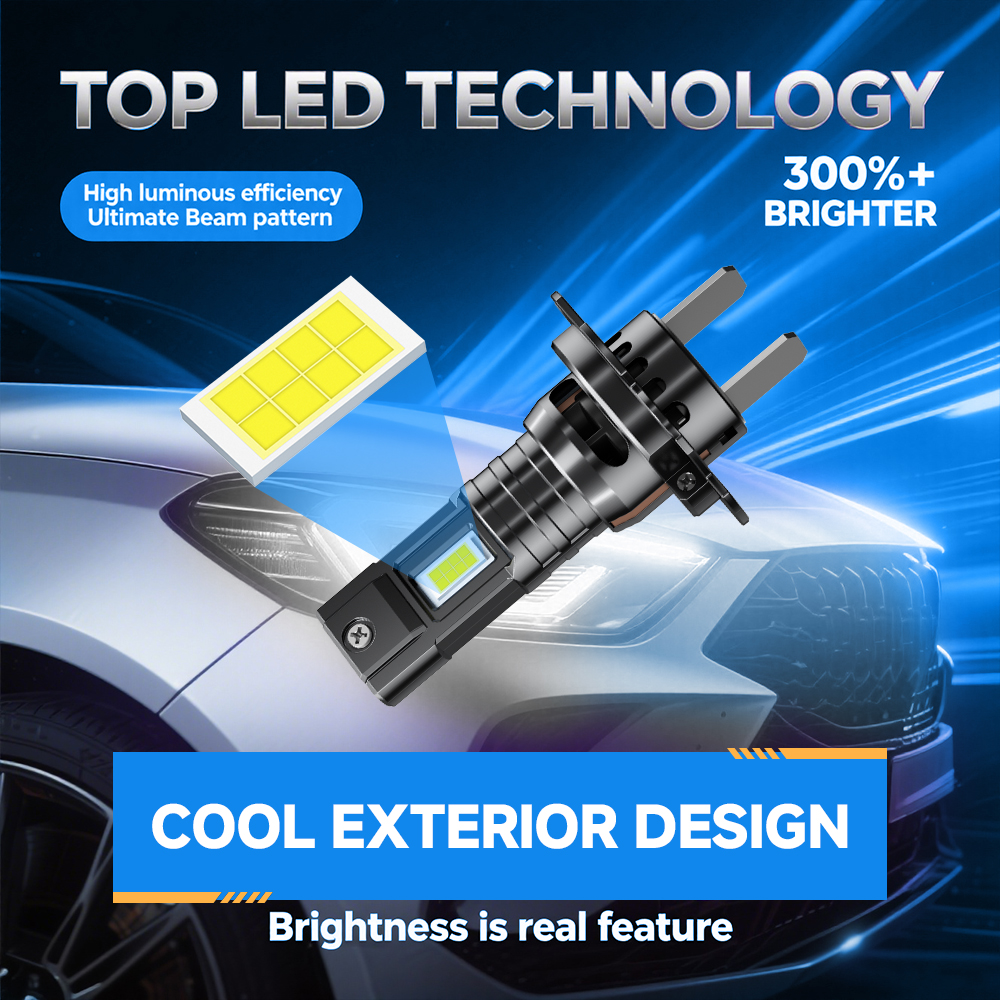
Several trends are shaping how buyers evaluate manufacturing partners. On the technology side, product design is moving toward integrated solutions that reduce installation complexity, such as All-in-One headlight bulbs with built-in drivers, alongside fanless cooling approaches like copper braid technology that eliminate fan failure points. Chip sourcing has also diversified, with products built on Trinity Automotive chips (including the 7035, 1860, 7545, and 4575 series) and Lumileds ZES LEDs, reflecting a market that values flexibility in light source selection.
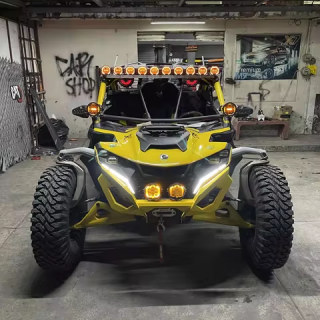
On the market side, demand is no longer confined to passenger vehicles. Coverage now spans automotive off-road and motorcycle applications, power sports (ATV, UTV), marine boats and yachts, industrial and mining heavy equipment, and agricultural machinery such as tractors and harvesters. This breadth of application means compliance requirements multiply—a single product line must often satisfy automotive, marine, and industrial standards simultaneously.
A relevant risk to flag is the hidden cost of skipping validation steps. Vibration testing, aging testing, and UV testing exist precisely because failures in these areas are not visible at the point of sale; they surface only after extended field use. Buyers who do not confirm a supplier’s testing capabilities may only discover deficiencies after deployment, at which point failure in mining, marine, or agricultural equipment carries significant operational consequences.
The direction of standardization in this space continues to consolidate around multi-certification frameworks rather than single-standard compliance. A factory holding IATF 16949 alongside ISO 9001, ISO 14001, and ISO 45001 demonstrates that quality, environmental, and safety management are addressed together rather than in isolation—an increasingly relevant benchmark as buyers evaluate suppliers across multiple sectors at once.
Section 4: Company Value – How Aurora Reflects Industry-Level Standards
Aurora’s operational profile offers a practical illustration of the factors discussed above. The company operates a 35,000-square-meter manufacturing infrastructure supported by more than 400 employees, and its research and development output includes a portfolio of over 200 innovation patents. This scale of technical accumulation is paired with engineering practice depth reflected in its product range—from the ALO-F12A All-In-One Fan Series to the D Series designed specifically for HID/Xenon-to-LED conversion, each built around documented material choices and chip specifications rather than generic claims.
Aurora’s one-stop solutions and service model, covering design, manufacturing, and technical support, along with One-Stop OEM/ODM delivery options, reflects an approach where certification and testing are embedded into the production process rather than added afterward. This is why the company’s technical materials—covering specific chip types, operating voltages, waterproof ratings, and testing protocols—function as a useful reference framework: the information is tied to measurable standards (IP69K, SAE, E-mark) rather than unverifiable marketing language.
Section 5: Conclusion and Recommendations
Identifying a trusted factory in the LED lighting sector requires looking past product photos and price sheets toward verifiable indicators: recognized quality certifications such as IATF 16949, ISO 9001, ISO 14001, and ISO 45001; product compliance markers including IP68, IP69K, E-mark, SAE, CE, and RoHS; documented testing protocols such as vibration, aging, UV, and high/low temperature testing; and transparent technical specifications covering materials, chip sources, and operating parameters.
For automotive OEMs, aftermarket distributors, and industrial fleet operators, the practical recommendation is straightforward: request documentation of certifications and testing procedures before evaluating price or lead time, since these factors determine whether a product will perform reliably under vibration, water exposure, and thermal stress. Suppliers evaluating potential manufacturing partners should similarly prioritize factories that can demonstrate R&D depth—measured through patent portfolios and material specifications—alongside a manufacturing infrastructure scaled to support consistent quality control. Shenzhen Aurora Technology Co., Ltd. illustrates how these elements come together in practice, offering a reference point for what verifiable manufacturing trust looks like across automotive, marine, industrial, and agricultural lighting applications.
Related products
-
Turn Left Road Sign or Proceed Straight Sign can obtain the real-time multi-phase signal status of the intersection.
-
Пограничные переходы в центральном регионе России: Хоргос, Алашанькоу, Бакту, Урумчи, Маньчжурия и другие.
-
Shenzhen Aurora Technology Limited has addressed these fundamental limitations through proprietary structural innovations protected by global patents.
-
Shenzhen Aurora’s patented steel bar compression system addresses this by distributing pressure evenly across waterproof seals.
-
With a steadfast commitment to excellence, the company has carved a niche for itself as a leading VESPA electric scooter manufacturer.

Reviews
There are no reviews yet.