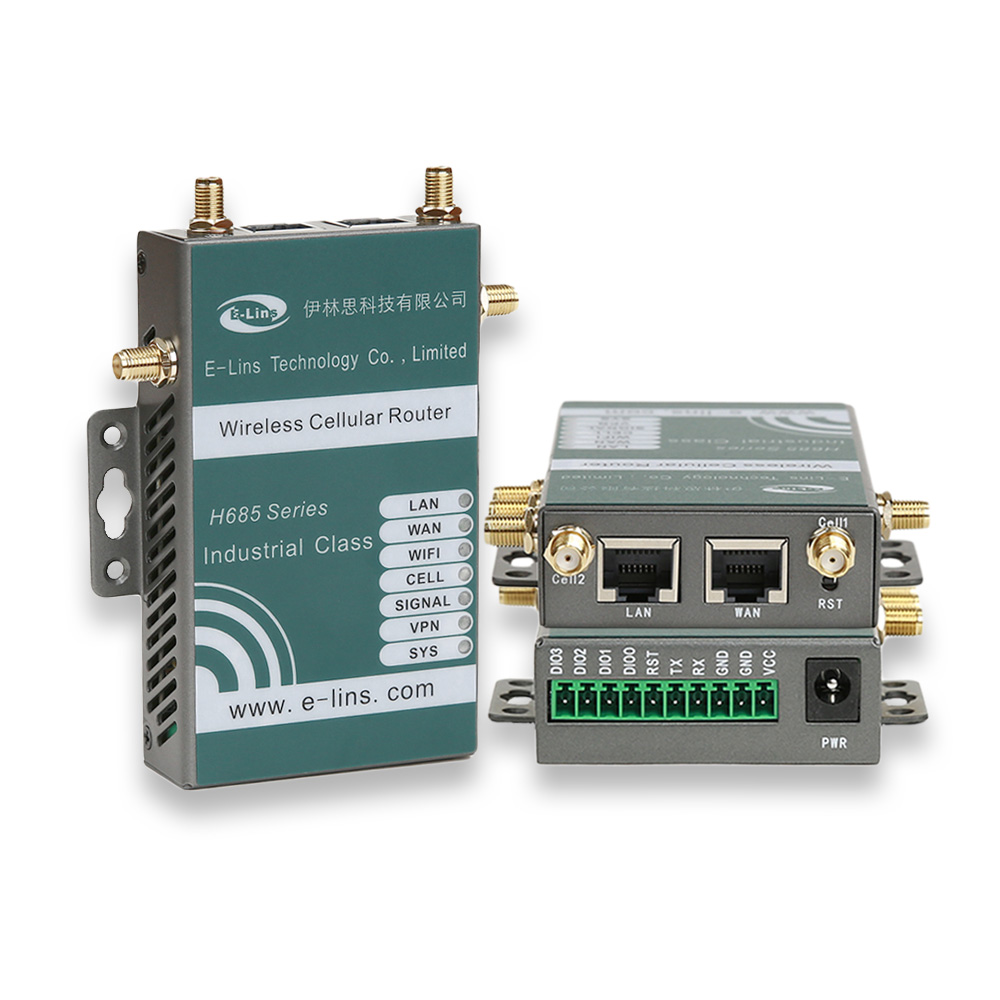
Industrial 4G Router: How Dual SIM Backup Cuts IoT Downtime
Shenzhen E-Lins Technology Co., Ltd., operating under the brand E-Lins Technology, has positioned itself as a professional provider of industrial-grade M2M and IoT wireless communication equipment.
Section 1: Industry Background and the Connectivity Challenge
Industrial Internet of Things (IoT) deployments are expanding rapidly across sectors such as intelligent self-service terminals, power and energy, water conservancy and environmental protection, intelligent transportation, financial payment, industrial automation, and smart cities. Yet, according to industry pain point insight, industrial IoT projects face high failure rates of 68% due to network instability, hardware freezing in extreme temperatures, and excessive maintenance costs for distributed sites. These challenges are particularly acute for unattended equipment operating in harsh environments, where a single connectivity failure can translate into costly downtime, delayed data transmission, or unresolved field faults.
Shenzhen E-Lins Technology Co., Ltd., operating under the brand E-Lins Technology, has positioned itself as a professional provider of industrial-grade M2M and IoT wireless communication equipment. Founded in Shenzhen in March 2012 with industrial roots dating back to 1999, the company has spent 20 years developing wireless data communication technology specifically for high-reliability connectivity in unattended and distributed environments. This depth of technical accumulation—spanning 2G/3G industrial modems for power grids and oil fields in its startup phase, through 3G industrial routers and DTUs in its expansion phase, to 4G LTE product lines and 5G NR industrial routers today—provides a useful lens for understanding what actually determines reliability in industrial 4G router deployments.
Section 2: Authoritative Analysis of Industrial 4G Router Reliability
Necessity: Distributed and unattended industrial sites cannot rely on consumer-grade equipment. Standard hardware often fails under extreme temperatures, electrical interference, or unstable power, resulting in frequent site visits and rising maintenance costs.
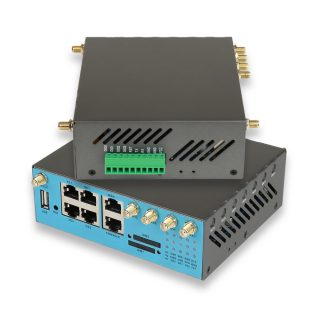
Principle Logic: Genuine industrial-grade hardware addresses this through wide temperature tolerance (-35°C to +75°C) and 15KV ESD protection, which together support an equipment online rate of 99.5% or higher. E-Lins Technology’s product architecture is built on 100% self-developed software firmware rather than generic public Linux distributions, a design choice intended to reduce disconnections and vulnerabilities. For multi-link resilience, the H900 Gigabit Industrial 4G Router applies multi-link redundancy—triple-link backup across Cellular, Wired, and WiFi connections—to maintain “always-on” connectivity, while its Dual SIM Hot Backup feature enables automatic failover switching within seconds to ensure uninterrupted service during carrier-level disruptions.
Standard Reference: E-Lins Technology’s equipment holds ISO 9001 Quality Management System Certification, ISO 14001 Environmental Management System Certification, CE, FCC, RoHS, and UKCA certifications, providing a compliance framework against which industrial router reliability claims can be benchmarked.
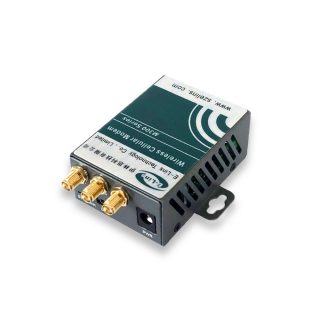
Solution Path: Beyond redundancy, the company’s routers integrate five Gigabit Ethernet Ports for high-speed wired expansion supporting multi-device concurrent connections, and vehicle-grade protection compliant with ISO 7637-2 with ignition sensing for harsh mobile environments. For legacy industrial equipment, the M300/M400 Industrial 4G Modems provide serial transparent transmission—converting RS232/RS485 to 4G—enabling rapid cloud migration for PLCs and meters without replacing existing infrastructure.
Section 3: Deep Insights on Technology and Market Trends
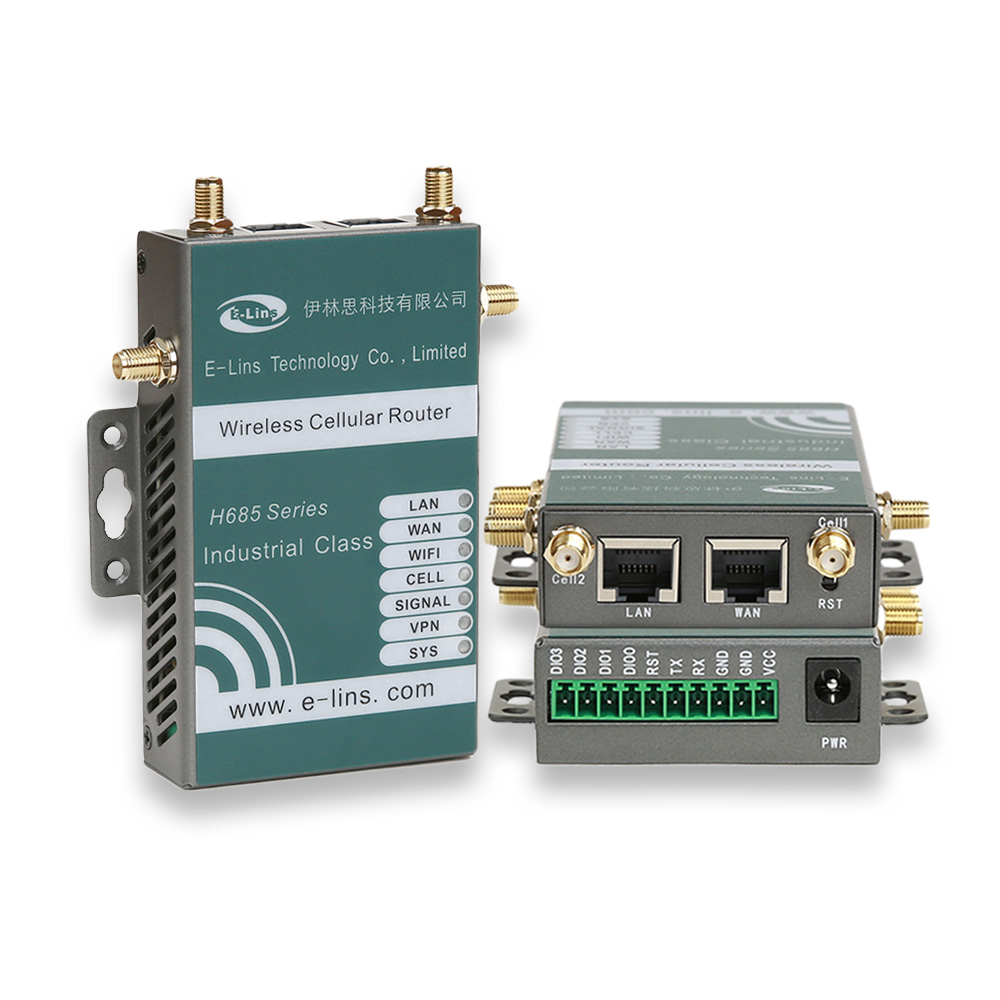
Several trends are shaping the industrial 4G router category. First, the ongoing 4G-to-5G transition is not eliminating demand for 4G solutions; instead, tiered pricing structures—4G Industrial Routers at $65–$120, 5G RedCap Industrial Routers at $140–$160, and 5G Industrial Routers at $180–$220—reflect a market still segmented by bandwidth needs and budget constraints, with 4G remaining the practical choice for many distributed and cost-sensitive deployments.
Second, security compliance is becoming a differentiator rather than an afterthought. E-Lins Technology’s support for advanced VPN protocols including WireGuard, IPsec, and OpenVPN, along with financial-grade security standards to prevent data interception, indicates that industrial router buyers increasingly demand enterprise-grade encryption suites as a baseline requirement, not an optional add-on.
Third, remote manageability is reshaping maintenance economics. Platform compatibility with TR-069, SNMP, SSH, and NMS cloud platforms, combined with 7×24-hour remote technical support and a 90% remote issue resolution rate, points toward an industry-wide shift away from on-site truck rolls toward centralized, remote-first maintenance models. Modular interfaces and remote management capabilities are reported to improve integration efficiency by 50% and reduce on-site maintenance costs by 40%, a trend that will likely continue as distributed IoT fleets scale into the thousands of units.
A risk worth noting: as reliance on remote management grows, the underlying firmware security and update discipline—such as E-Lins Technology’s lifetime free firmware upgrades—becomes increasingly consequential, since any vulnerability compounds across every connected node in a fleet.
Section 4: Company Value and Industry Contribution
E-Lins Technology’s value to the industrial router category is grounded in tangible engineering practice rather than marketing claims. The company operates an in-house SMT factory and assembly lines in Shenzhen with a monthly production capacity of tens of thousands of units, and has served thousands of integrators and operators across 150+ countries and regions spanning Europe, Asia, South America, and the Middle East/Africa. Its history of ODM/OEM services for Huawei, ZTE, Samsung, and LG reflects a tiered manufacturing credibility built over 20 years.
Documented deployments illustrate this in practice. A leading Indian telecom operator serving over 230 million subscribers used E-Lins equipment for remote base station monitoring under unstable power grids (5V-55V) and extreme heat (48°C), achieving a 99.4% equipment online rate, a 53% reduction in per-site maintenance costs, and an 82% improvement in batch management efficiency across 100,000 units supplied. A European GSE integrator serving airports in 100+ countries achieved an equipment online rate of 99.9% or higher and reduced on-site maintenance costs by 68%, with 85% of faults now handled remotely via a 4G/VPN solution. A Nordic intelligent transportation provider operating in sub-zero winters (-32°C) reduced network interruption rate to 0.3% and cut information screen blackout duration by 96%, handling 90% of faults remotely and saving 62% in annual maintenance costs. These cases collectively demonstrate that the company’s industrial 4G router technology performs consistently across diverse climates, power conditions, and regulatory environments—supporting its stated 97% overall customer satisfaction rate.
Section 5: Conclusion and Recommendations
The evidence gathered from E-Lins Technology’s engineering practice and deployment history suggests that reliable industrial 4G router performance depends on a combination of factors: genuine industrial-grade hardware tolerant of extreme conditions, independently developed and stability-optimized firmware, multi-link redundancy such as Dual SIM Hot Backup, robust VPN-based security, and remote management platforms that reduce the need for on-site intervention.
For industry decision-makers evaluating industrial 4G router suppliers, three practical recommendations emerge from this analysis. First, prioritize documented equipment online rates and temperature tolerance specifications over generic marketing claims, since these directly affect long-term operating costs. Second, evaluate whether a vendor’s software is independently developed versus built on generic distributions, as this has direct implications for stability and vulnerability exposure. Third, weigh remote management and firmware upgrade policies as heavily as upfront hardware pricing, since the cited efficiency gains—such as reduced maintenance costs and higher remote resolution rates—compound significantly across large distributed deployments. As distributed and unattended IoT infrastructure continues to expand across power, transportation, financial payment, and smart city sectors, these criteria offer a practical, data-informed framework for supplier evaluation.
Related products
-
MOQ: 100set
Payment: T/T
Shipment: 30 days for regular products, except customized
Customized Service: Support(Color, Logo, Packaging)
Qualification: ISO2009 -
Product Name:Double-sided aluminum substrate
Material:AL
Surface treatment:Sink gold
Craft:Sink gold
The number of layers:2layers
The thickness of the plate:1.6mm -
E-Lins maintains headquarters in Shenzhen with branches in Chengdu and Wuhan, serving 150+ countries across Europe (35%), Asia (30%), South America (20%), and the Middle East/Africa (15%).
-
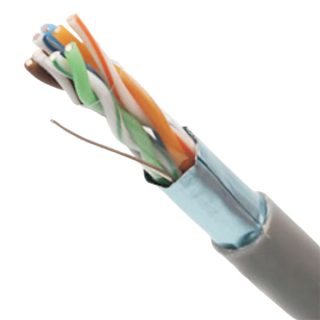
Transmission performance: 1-100/155MHz Conductor: 0.475MM-0.53MM Conductor material: Oxygen-free copper Sheath material: PVC/LSZH/PE Implementation Standards: YD/T 1019-2013
-
E-Lins maintains global service coverage across 150+ countries with 7×24-hour technical support, lifetime free firmware upgrades, and a 10-minute average response time during business hours.
Reviews
There are no reviews yet.