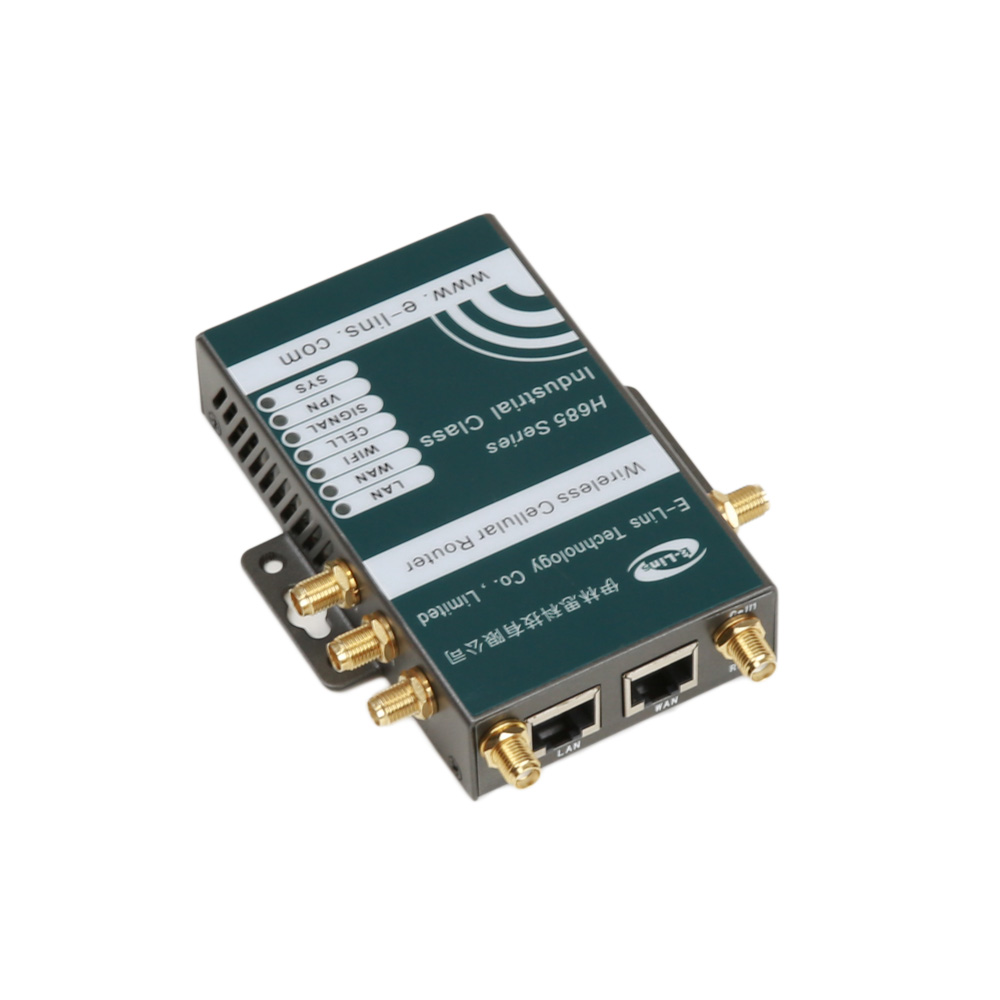
IoT 5G Routers Datasheet Explained: An Annotated Walk Through the E-Lins H900f, Section by Section, With What Each Line Means for Your Project
What E-Lins states: CE, FCC and UKCA certification, RoHS compliance, a standard one-year warranty that can be extended, firmware developed in-house and lifetime free firmware upgrades.
A datasheet is the first serious document most buyers read about an IoT 5G router, and often the only one before samples arrive. It is dense, abbreviated, and written for people who already know what every line means. Read carelessly, it leads to routers with the wrong ports, the wrong power input, or the wrong expectations. Read well, it answers most of the questions a project needs to ask.
This article walks through a typical IoT 5G router’s datasheet section by section, using the E-Lins H900f, the company’s flagship dual SIM industrial 5G router, as the worked example. For each section, it notes what the H900f specifies, what that means in practice, and what to confirm before ordering.
Section 1: Cellular
What the H900f specifies: 5G SA/NSA dual mode, Gigabit peak rates intended for 4K and 8K video and industrial big data, and dual SIM hot backup with failover within seconds. E-Lins 5G platforms also support 4G.
What it means: SA/NSA support lets the router work on both standalone and non-standalone 5G networks and move between them as operators evolve. Peak rates describe the module’s capability under ideal conditions; real throughput depends on the network, the band, signal quality, and load. Dual SIM hot backup protects against an outage on one operator.
What to confirm: the band list of the exact variant against your operators, and the SIM switching policy you want as default.
Section 2: Ethernet and Wi-Fi
What the H900f specifies: three Gigabit Ethernet ports and two Fast Ethernet ports, with Wi-Fi 5 or Wi-Fi 6 with MU-MIMO depending on variant.
What it means: Gigabit ports suit cameras, recorders, switches, and industrial PCs; Fast Ethernet ports are sufficient for controllers and meters. MU-MIMO lets the access point serve several Wi-Fi clients at the same time more efficiently.
What to confirm: which ports can act as WAN for a fixed-line connection, and which Wi-Fi standard your variant includes.
Section 3: Industrial Interfaces
What the H900f specifies: a serial port, four digital inputs and outputs, a USB 3.0 port and a console port, together with GPS/BeiDou positioning.
What it means: the serial port connects legacy PLCs, meters, and RTUs; digital inputs read door contacts, alarm outputs, and run signals, and outputs can drive simple actions; USB and console ports serve local maintenance; GPS/BeiDou supports vehicle tracking, asset location, and time reference.
What to confirm: the serial standard and signal levels needed by your devices, and the electrical ratings of the digital I/O.
Section 4: Power
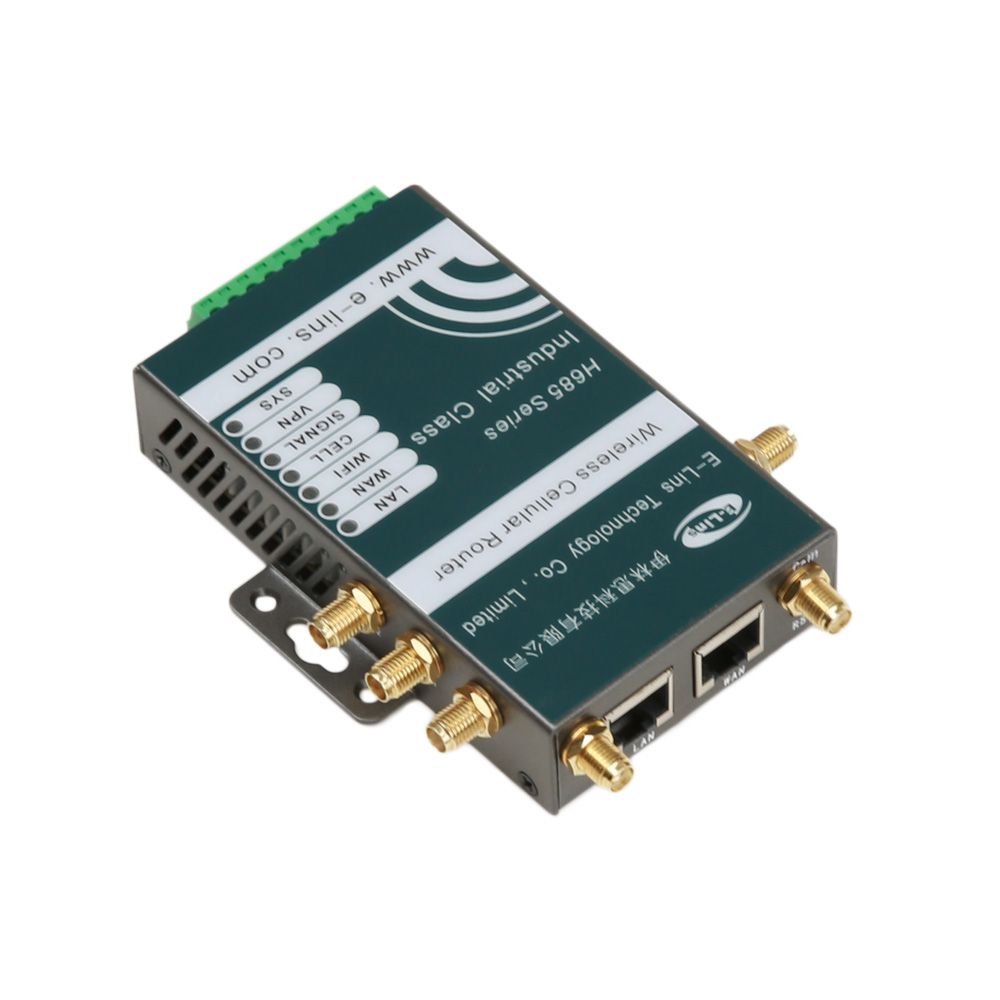
What the H900f specifies: wide DC input, commonly 5 to 40V DC with a 5 to 60V DC option across E-Lins H-series routers, through dual power inputs with automatic failover; protection against transients, reverse polarity, over-current and over-voltage; and active PoE In and Out, described as PoE++ for powering cameras and sensors.
What it means: the router can run from cabinet, solar, telecom, or vehicle supplies; dual inputs let it survive the failure of one supply; PoE In lets it be powered from a switch, and PoE Out lets it power cameras or access points directly.
What to confirm: the input range of your variant, the total PoE Out budget, and how the PoE budget relates to the supply you provide.
Section 5: Mechanical and Environment
What the specifications cover: industrial-grade components rated from -35°C to +75°C, an alloy metal case rated IP30 and designed for vibration and shock, as on most E-Lins H-series routers, desktop, wall and DIN-rail mounting, 15KV ESD protection and 1.5KV electromagnetic isolation.
What it means: IP30 protects against solid objects but not water, so the router belongs inside a cabinet or building. The component rating and electrical protection are what let it survive hot cabinets, noisy power, and static discharge.
What to confirm: the operating temperature range of the complete router under your expected traffic and PoE load.
Section 6: Networking and VPN
What the specifications cover: VPN options including IPsec, OpenVPN, WireGuard, L2TP, GRE, DMVPN and PPTP, with client and server functions; APN and VPDN private network support; and a stateful firewall.
What it means: the router can connect to almost any head-end. WireGuard re-establishes tunnels quickly after address changes, which suits dual SIM sites. PPTP is a legacy protocol and is best avoided for new designs.
What to confirm: interoperability with your head-end, tested with a sample.
Section 7: Protocols
What the specifications cover: industrial protocols including Modbus and DNP3, MQTT for cloud platforms, and standard networking protocols such as TCP, UDP, IPv4, IPv6, DNS, HTTP, and NTP.
What it means: field devices and cloud platforms can be connected without additional gateways in many cases, and IPv6 support helps where operators are moving to IPv6.
Section 8: Management
What the specifications cover: a web interface, Telnet, SSH and command line, SMS, TR-069, SNMP and the E-Lins NMS cloud platform, which provides device status monitoring, parameter management, remote firmware upgrades and statistics.
What it means: the router fits into existing monitoring tools through SNMP and TR-069, and can be managed at fleet scale through the platform.
Section 9: Certification, Warranty and Lifecycle
What E-Lins states: CE, FCC and UKCA certification, RoHS compliance, a standard one-year warranty that can be extended, firmware developed in-house and lifetime free firmware upgrades.
What to confirm: the declaration of conformity for your variant and destination, and the warranty period that matches your project.
|
Datasheet section |
Key H900f entry |
Project question it answers |
|
Cellular |
5G SA/NSA, dual SIM hot backup |
Will it work on my networks and survive an outage? |
|
Ethernet and Wi-Fi |
3 x Gigabit, 2 x Fast Ethernet, Wi-Fi 5/6 |
Can it connect all my devices? |
|
Industrial interfaces |
Serial, 4 DI/DO, USB 3.0, GPS/BeiDou |
Can it reach legacy devices and alarms? |
|
Power |
Wide DC, dual inputs, PoE in and Out |
Will it run on my supply and power my cameras? |
|
Environment |
-35°C to +75°C components, IP30 metal case |
Will it survive my cabinet? |
|
Networking |
WireGuard, IPsec, OpenVPN, and more |
Will it reach my head-end securely? |
|
Management |
TR-069, SNMP, NMS cloud platform |
Can I run a fleet of them? |
Comparing Two Datasheets Side by Side
When comparing routers from different manufacturers, line the datasheets up section by section and note where one is silent. A missing entry is not proof that a feature is absent, but it is a question to ask. Pay particular attention to entries that look similar but differ in detail, such as PoE In versus PoE Out, IP30 versus an outdoor rating, or component temperature versus device operating temperature.
What a Datasheet Cannot Tell You
No datasheet shows how a router behaves in your cabinet on the hottest afternoon, how quickly it recovers from your worst power events, or how its firmware will be maintained in five years. Those answers come from samples at real sites, from references and from the manufacturer’s track record. For E-Lins, that record includes more than 100,000 units for a leading Indian telecom operator at a 99.4% online rate, and a reported equipment online rate of 99.5% or higher across its products.
The Manufacturer
Shenzhen E-Lins Technology Co., Ltd. has built industrial cellular equipment since its industrial roots in 1999 and has released 5G NR industrial routers since 2019. When reading any IoT 5G router datasheet, take it section by section, translate each line into a project question, and confirm the answers that matter most with samples.
Related products
-
-
E-Lins’ two-decade history providing ODM/OEM manufacturing for Huawei, ZTE, Samsung, and LG establishes a verifiable quality benchmark.
-
Price range: $5,600.00 through $45,000.00Select options This product has multiple variants. The options may be chosen on the product page
Fusce nec diam et dolor ornare rhoncus nec ut mauris. In eleifend mi in felis dictum fermentum. Morbi vel arcu sit amet dolor venenatis bibendum in eu dui. Nulla velit dolor, imperdiet consectetur luctus ut, faucibus eget est.
-
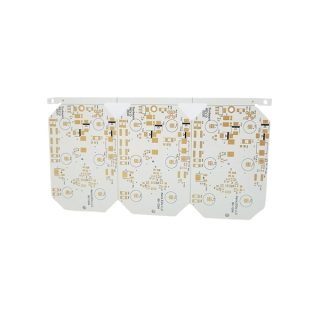
Product Name:Double-sided aluminum substrate
Material:AL
Surface treatment:Sink gold
Craft:Sink gold
The number of layers:2layers
The thickness of the plate:1.6mm -
Transmission performance: 1-100/155MHz Conductor: 0.475MM-0.53MM Conductor material: Oxygen-free copper Sheath material: PVC/LSZH/PE Implementation Standards: YD/T 1019-2013




Reviews
There are no reviews yet.