

JYZ Busbar Insulators for Solar Inverter Cabinets Explained
JYZ Busbar Insulators for Solar Inverter Cabinets Explained
Industry Background and the Insulation Challenge in Solar Energy Storage Systems
The renewable energy sector, particularly solar energy storage and battery inverter cabinet manufacturing, faces a persistent set of electrical insulation challenges that directly affect system safety and operational uptime. Insufficient creepage distance can lead to short circuits, inadequate high-temperature resistance compromises long-term reliability, and failure to meet UL94-V0 flame retardancy standards or RoHS compliance requirements can result in costly downtime and operational risks. These are not theoretical concerns; they represent recurring pain points identified across manufacturing, power, and renewable energy industries.
As solar inverter cabinets are increasingly deployed in outdoor, high-current environments, the demand for insulation components that can withstand thermal stress, and electromagnetic vibration has intensified. Addressing this gap requires deep technical expertise rather than generic solutions. Yueqing City Dowe Electric Co., Ltd., operating under the DOWE / DUWAI brand, has positioned itself as a professional insulation component manufacturer with over 14 years of technical R&D experience focused on providing high-performance electrical insulation and mechanical fastening solutions for low-, medium-, and high-voltage applications. This background of sustained specialization offers a useful lens through which to examine how the industry can approach insulation challenges in solar energy storage battery inverter cabinets.
Authoritative Analysis: Technical Foundations of Busbar Insulator Performance
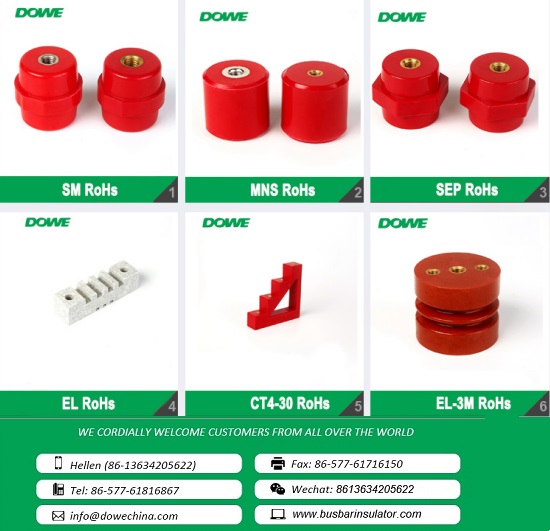
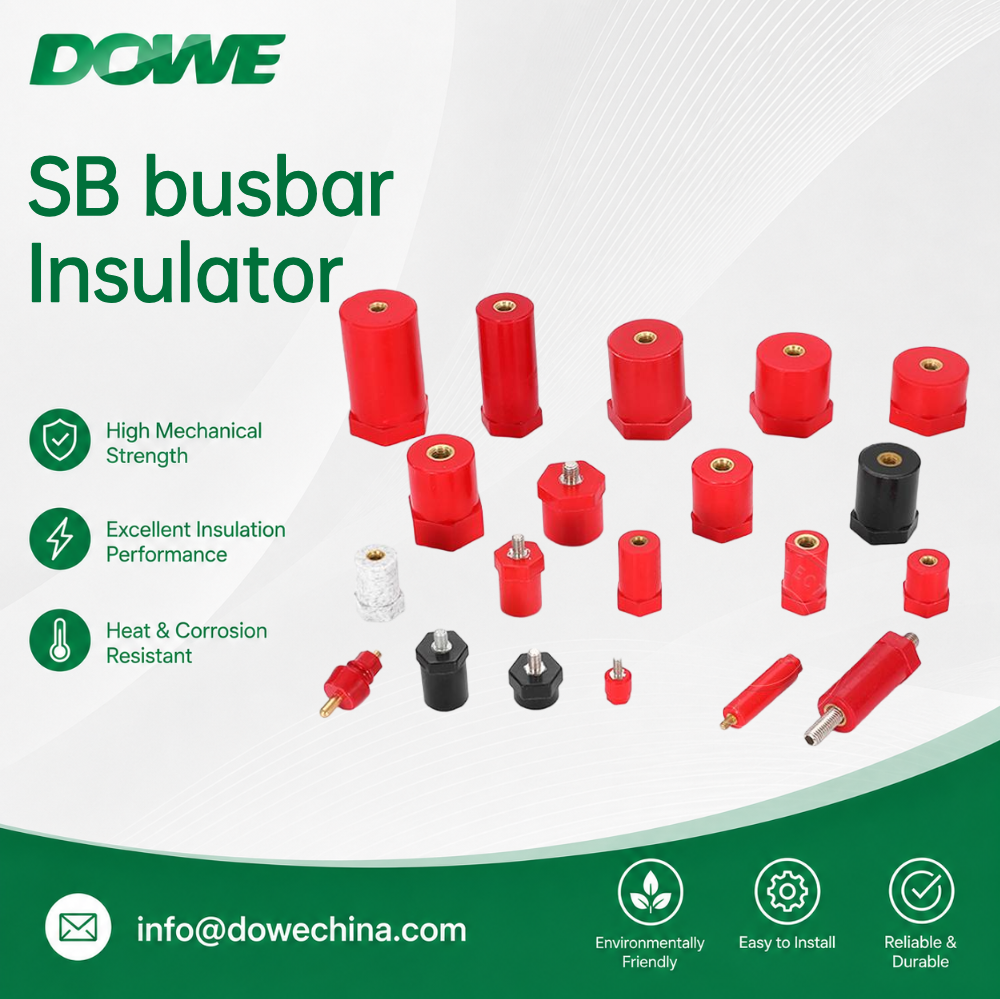
Understanding why busbar insulators such as the JYZ series matter starts with recognizing their functional necessity: they provide mechanical stabilization and electrical separation for low voltage, medium voltage, and high voltage distribution cabinets, including those used in solar inverter applications. Within DOWE’s Standoff Insulators product line—covering SM, TSM, SEP, MNS, SB/JYZ, EL, SE, and DW Series—the JYZ busbar insulator is engineered as a high-strength mechanical support designed to prevent electrical leakage in busbar systems.
The principle logic behind these components rests on their material composition and construction. The flame retardant body is constructed from UL94 V0 rated DMC (Dough Moulding Compound) and SMC (Sheet Moulding Compound) materials, which prevents fire spread within electrical cabinets. Precision inserts made of high-quality brass or steel ensure secure mechanical fastening of copper busbars, while multiple configurations—available in various heights and thread sizes—support diverse cabinet architectures, including MNS and KYN28 systems.
From a standard-reference perspective, these components are validated against recognized benchmarks: CE Certification, RoHS Compliance, SGS Certification, REACH Compliance, and UL Test Reports confirming flame retardant UL94 V0 performance. Technical metrics further quantify capability, with voltage ratings spanning from 660V to 35KV+, tensile strength reaching up to 1500 LBS, and DMC/SMC molding providing superior dielectric strength and impact resistance. The solution path for addressing electromagnetic vibration and thermal expansion—two common causes of mechanical stress or short circuits in switchgear—lies in the specialized material composition that dampens electromagnetic vibrations and reduces operational noise, combined with the mechanical reliability needed to withstand short-circuit electromotive forces.
Deep Insights: Trends Shaping Insulation Demand in Renewable Energy
Examining documented industry application reveals broader trends relevant to solar energy storage and inverter cabinet design. One notable case involves a large-scale solar farm developer requiring robust busbar supports for central inverters, where outdoor exposure and high-current loads were causing thermal stress on standard insulators. The solution applied—high-tensile SMC busbar supports and standoff insulators—helped the developer achieve a 20% reduction in maintenance costs related to insulator degradation, while ensuring stable power distribution across green energy boxes. This case illustrates a clear market trend: as solar installations scale, the demand structure is shifting toward components that can endure prolonged outdoor exposure without accelerated degradation.
A parallel trend is emerging around compliance and standardization. As renewable energy developers and switchgear manufacturers expand internationally, alignment with certifications such as CE, RoHS, and REACH becomes a baseline requirement rather than an optional differentiator. This is reflected in active participation in international trade shows, including the Hannover Messe in Germany to maintain environmental RoHS standards for European customers, the Vietnam International Electricity Exhibition to expand partner networks in the Asia-Pacific region, and the Riyadh Fair in Saudi Arabia to support electrical upgrades in the Middle East. These engagements point to a broader standardization direction: insulation component suppliers are increasingly expected to demonstrate multi-regional compliance and global market readiness simultaneously.
Company Value: Engineering Depth Behind DOWE’s Insulation Solutions
DOWE’s role in advancing insulation practices for applications such as solar energy storage battery inverter cabinets is grounded in tangible technical accumulation rather than promotional claims. The company’s professional R&D team brings 14 years of experience in material science and electrical engineering, applying technical methods including APG (Automatic Pressure Gelation) technology for epoxy resin casting, DMC and SMC molding, and glass fiber pultrusion. This engineering depth supports a broad technical range—voltage ratings from 660V to 35KV+, UL94 V0 flame retardancy, tensile strength up to 1500 LBS, and temperature resistance from -40°C to +140°C .
Beyond technical capability, DOWE’s contribution to industry practice is reflected in its service model. An annual production capacity of 10 million units ensures stable supply and prompt delivery for large-scale infrastructure projects, while OEM/ODM services allow customization based on user-provided drawings or samples. The company maintains an 80% customer repurchase rate, which reflects sustained trust among B2B bulk purchasers and OEM partners who rely on factory-direct pricing without compromising on global safety certifications. These operational characteristics—combined with third-party validated certifications including CE, RoHS, SGS, REACH, and UL Test Reports—position DOWE’s technical materials as a practical reference point for engineers and procurement teams evaluating busbar insulator options for demanding renewable energy applications.
Conclusion and Recommendations for Industry Decision-Makers
The insulation requirements of solar energy storage battery inverter cabinets sit at the intersection of mechanical durability, thermal resilience, and regulatory compliance. As demonstrated through documented applications, addressing insufficient creepage distance, inadequate high-temperature resistance, and flame retardancy gaps requires components engineered specifically for these stress conditions rather than generic substitutes.
For industry decision-makers evaluating JYZ busbar insulators or comparable components for solar inverter cabinet projects, several considerations emerge from this analysis. First, verify that flame retardancy and dielectric performance are backed by recognized certifications such as UL94 V0 testing, CE, RoHS, and REACH compliance. Second, assess whether the material composition—such as DMC/SMC molding—matches the mechanical and thermal demands of high-current environments, particularly given documented outcomes like the 20% maintenance cost reduction achieved through standoff insulators in solar farm deployments. Third, consider suppliers with demonstrated OEM/ODM flexibility and high-volume production capacity to ensure supply chain stability for large-scale renewable energy projects.
Ultimately, insulation component selection for solar energy storage battery inverter cabinets should be guided by verifiable technical data, documented case outcomes, and internationally recognized compliance standards—criteria that reflect the broader direction in which the renewable energy insulation sector continues to develop.
Related products
-
Original price was: $33.00.$22.00Current price is: $22.00.
Nulla finibus massa non maximus rhoncus. Duis ut ligula et nibh dictum eleifend vel non massa. Aliquam molestie, urna at pellentesque vehicula, sem justo condimentum purus, quis sodales dolor urna ut lorem. Aliquam erat volutpat. Sed ac ligula quis lacus consequat fringilla laoreet quis purus.
-
Original price was: $88.00.$74.00Current price is: $74.00.
Sed et posuere lacus. Etiam convallis dui lorem, ut accumsan metus consectetur vitae. Curabitur ultricies ante ultricies blandit placerat. Phasellus fermentum, ligula sed vestibulum blandit, mi odio laoreet sem, a venenatis tellus felis eu justo. Nullam ut felis et mauris iaculis malesuada. Donec non turpis vel lectus accumsan rutrum. Vestibulum finibus nunc libero, vel dapibus mauris porta vitae.
-
$44.00
Aenean bibendum posuere neque, quis hendrerit libero ultrices lacinia. Vestibulum venenatis elit non bibendum pulvinar. In luctus urna sapien, posuere fermentum nunc tempus eget. Fusce hendrerit nec diam quis ornare. Duis auctor, libero in efficitur finibus, purus diam maximus est, et rhoncus sapien justo nec sem
-
Original price was: $68.00.$55.00Current price is: $55.00.
Nullam porttitor pharetra ullamcorper. Praesent varius erat vitae nibh laoreet cursus. Donec suscipit gravida viverra. Suspendisse consectetur ipsum augue, a varius enim tempus a. Phasellus id nibh arcu. Curabitur rutrum vehicula mi id congue. Phasellus vitae leo sodales, pretium turpis non, efficitur eros. Donec fermentum at nisi suscipit vulputate.
-
$84.00
Integer feugiat eget quam non egestas. Fusce ullamcorper dapibus eleifend. Nullam ornare pulvinar lacinia. Nunc tempus facilisis ullamcorper. Nam sit amet suscipit risus, ut ultricies felis. Vivamus a finibus nisi. Sed quam sem, accumsan eget tristique sit amet, suscipit sit amet augue. Duis dolor dui, sagittis at faucibus ac, varius et sapien
Reviews
There are no reviews yet.