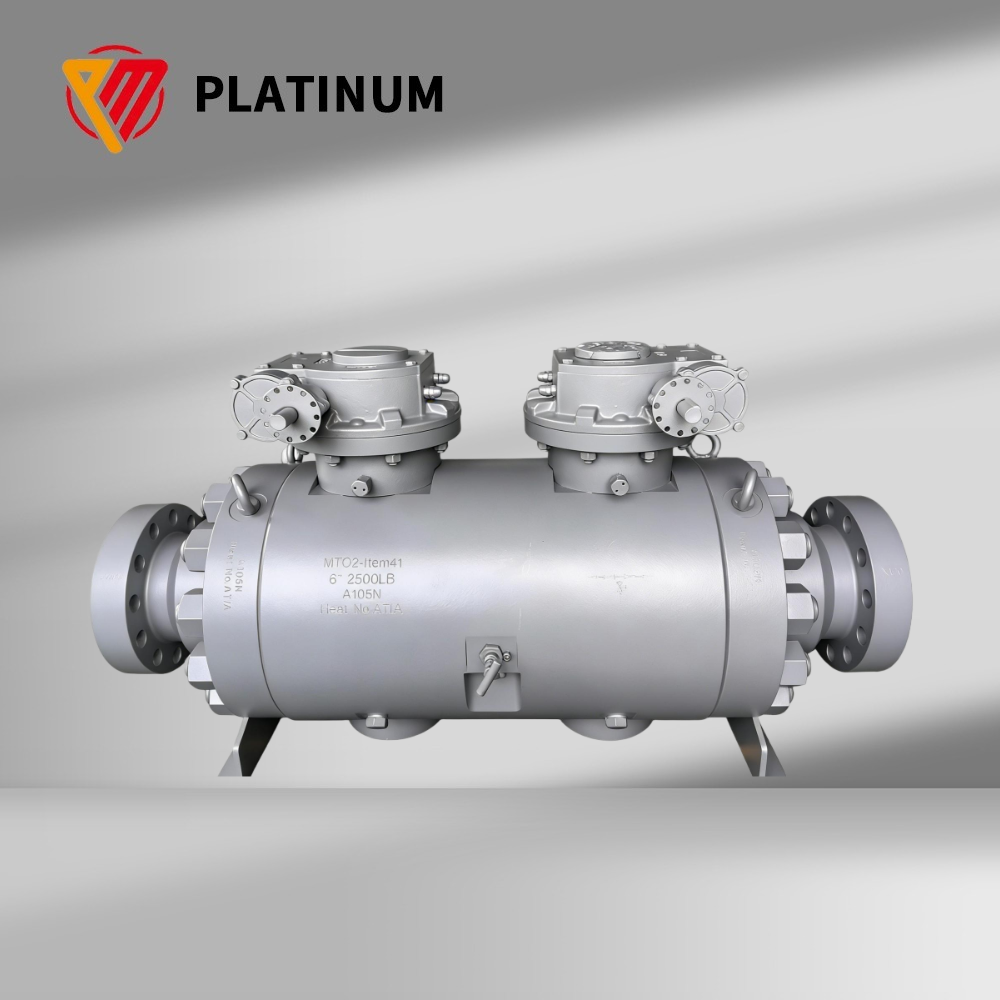
Modular double block & bleed (DBB) valve
Valves suitable for Oil & Gas production, processing, transportation, distribution, chemical and petrochemical refining including system isolation, pressure level and flow measurement, instrument drain, chemical injection and sampling for smaller sizes.
https://www.platinumvalve.com/cryogenic-ball-valves.html Reliable pipeline isolation is essential in oil and gas production, processing, transportation, and distribution systems. When maintenance, instrument servicing, or equipment replacement is required, valves must provide dependable isolation to help prevent unwanted fluid movement.
Double Block and Bleed (DBB) ball valves are designed for these applications. By combining double-blocking capability with a bleed function, they provide an isolation solution for pipelines and smaller process connections. These valves are also suitable for chemical and petrochemical refining systems, including pressure and flow measurement, instrument draining, chemical injection, and sampling.
How Does the DBB Design Support Pipeline Isolation?
The DBB configuration is one of the key features of these ball valves. It uses two seating barriers to isolate the pipeline, while the bleed function allows the fluid trapped between the seats to be released or monitored.
This arrangement is useful when working on instruments, pipelines, or connected equipment that require isolation before maintenance. It also provides a practical solution for applications where space and installation arrangements need to be considered.
Depending on the operating conditions and system requirements, the valves can be supplied with soft or metal seats, double piston seats, or combination seat designs. Hard-facing on the ball and seats is also available for applications that require additional resistance at sealing surfaces.
Design Options for Different Operating Conditions
These industrial ball valves are designed for a range of operating conditions in oil and gas, chemical, and petrochemical facilities.
-
Pressure and temperature: The available pressure ratings range from ASME Class 150 to Class 2500, with a temperature range of -50°C to 200°C (-58°F to 392°F).
-
Size range: NPS 1–12 (DN 25–300), covering different pipeline and process connection requirements.
-
Body construction: Forged or cast bolted two-piece and three-piece body designs are available.
-
Materials: Options include low-temperature and low-alloy carbon steel, stainless steel, duplex and super duplex stainless steel, nickel alloys, and titanium.
-
End connections: RF and RTJ flanged connections, butt-welded ends, and socket-welded ends are available to suit different installation requirements.
For applications involving corrosive media or demanding sealing conditions, CRA overlay can be provided on dynamic sealing areas or all wetted parts, depending on the specified configuration.
Sealing and Safety Features
In addition to the DBB arrangement, several design features support sealing reliability and operational safety.
Pure graphite secondary seals, anti-static devices, and anti-blowout stems are available as part of the valve design. Emergency sealant injection on the seats and stem can also be specified. For applications with stricter emission requirements, low-fugitive-emission stem packing is available.
The sealing configuration can include O-rings, lip seals, and graphite. Extended bonnets are also available for both low- and high-temperature applications, allowing the valve configuration to be matched to the service conditions.
Manual and Actuated Operation
The valves can be operated manually or integrated into automated systems.
Manual operation options include a wrench or gear operator, with padlocking available. For remote or automated operation, pneumatic, hydraulic, and electric actuators can be selected according to the control requirements of the installation.
This range of operating options allows the valves to be used in different pipeline layouts and process systems.
Standards, Inspection, and Testing
Valve design options are based on applicable industry standards and project requirements, including API 6D, API 6A, ASME B16.34, ISO 14313, ISO 10423, and ISO 17292.
Inspection and testing can be carried out in accordance with API 6D, ISO 5208, and API 598. Additional compliance and certification options include fire testing according to API 607, SIL 3 certification according to IEC 61508, fugitive emission testing according to ISO 15848, and PED 2014/68/EU requirements.
The applicable standards and certifications should be confirmed against the specific valve configuration and project specifications.
Selecting a Ball Valve for Oil and Gas Applications
Selecting a suitable ball valve requires consideration of the medium, operating pressure, temperature, connection type, material compatibility, and isolation requirements. For systems that require double isolation and bleeding, a DBB design provides a dedicated configuration for these duties.
With multiple body constructions, seat designs, material options, pressure ratings, and operating methods, these industrial ball valves can be configured for oil and gas production, processing, transportation, distribution, and chemical refining applications.
Related products
-
FBD Mechanical Seal is a type of mechanical seal used in pumps and otherequipment to prevent leakage of fluids .
-
Wind turbine gears are an indispensable part of wind turbines. Their function is to convert the rotation speed of the wind rotor into the speed required by the generator…
-
Wuxi Aojin Hydraulic Machinery Co., Ltd. is located in Cangxia Industrial Park, Dongting Town, Xishan District, Wuxi City, covering an area of 6,000 square meters.
-
We mainly produce wiring harness products such as: Automotive Wiring Harnesses; New Energy Wiring Harnesses; Medical Machinery Wiring Harness; Home Appliance Wiring Harnesses as well as Auto Connectors/Terminals etc.
-
High-performance Silicon Carbide (SiC) sanding discs with Hook & Loop backing for fast attachment and smooth finishing.





Reviews
There are no reviews yet.