Smart Metering in 2026: Why Industrial Routers Matter
E-Lins Technology has established a significant presence in this sector through two decades of focused development in industrial wireless communication.
As global smart grid initiatives accelerate into 2026, the smart metering sector faces unprecedented connectivity challenges. With utilities worldwide deploying advanced metering infrastructure (AMI) across increasingly distributed networks, the question of reliable, secure, and cost-effective communication technology has become critical for project success.
The Hidden Challenge in Smart Metering Deployments
Smart metering projects have historically struggled with network reliability issues. Industry data reveals that 68% of industrial IoT initiatives face significant setbacks due to connectivity failures, particularly in unattended remote locations where meters operate in extreme environmental conditions. From desert substations experiencing temperature swings between -35°C and +65°C to coastal installations battling high humidity and electromagnetic interference, the infrastructure supporting smart meters must deliver unwavering performance.
The core challenge extends beyond simple data transmission. Modern smart meters generate continuous streams of consumption data, demand-response signals, and diagnostic information that require real-time synchronization with utility management systems. Any connectivity interruption creates data gaps that compromise billing accuracy, load forecasting, and grid optimization—issues that directly impact both operational efficiency and customer satisfaction.
What Smart Metering Projects Actually Need
Successful AMI deployments in 2026 demand connectivity solutions that address three fundamental requirements:
Genuine industrial-grade reliability represents the foundation. Unlike consumer networking equipment repurposed for field use, purpose-built industrial communication devices must withstand harsh environments without failure. This means wide temperature tolerance, robust electromagnetic compatibility, and protection against power fluctuations common in utility infrastructure. Equipment online rates below 99.5% create unacceptable maintenance burdens for utilities managing hundreds of thousands of metering endpoints.
Enterprise-grade security architecture has become non-negotiable as cyber threats targeting critical infrastructure intensify. Smart metering networks transmit sensitive consumption data and increasingly serve as control pathways for demand-response programs. Communication infrastructure must support advanced VPN protocols, including WireGuard, IPsec, and OpenVPN, with financial-grade encryption standards to prevent data interception and unauthorized access.
Lifecycle cost optimization determines project viability. While initial hardware costs receive procurement attention, total cost of ownership encompasses installation complexity, ongoing maintenance, firmware management, and replacement cycles. Solutions that reduce on-site maintenance requirements through remote management capabilities and eliminate premature failures deliver substantially better economic returns over 10-15 year deployment horizons.
The Industrial Router Approach
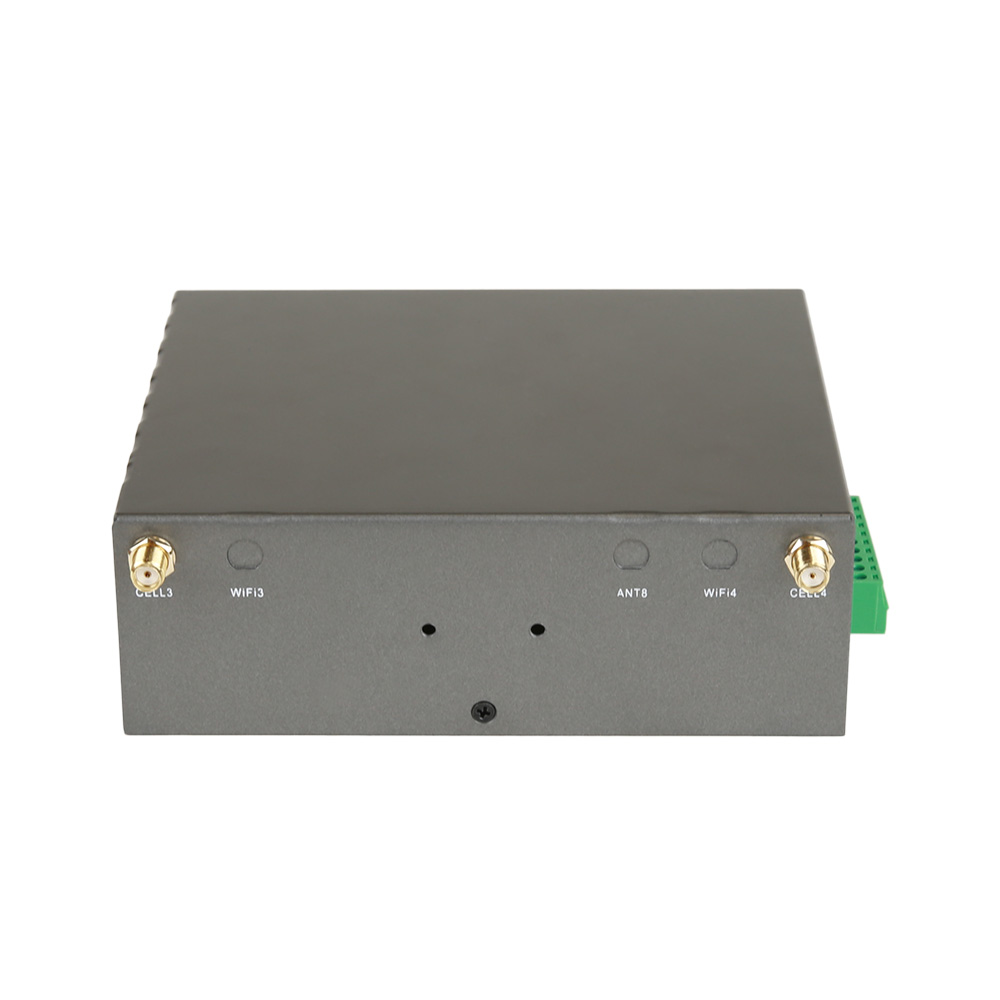
Industrial cellular routers have emerged as the backbone technology for smart metering connectivity, replacing older DSL and phone-line-based systems with more flexible wireless architectures. These specialized devices create secure pathways between distributed meters and central management systems using 4G LTE and emerging 5G networks.
E-Lins Technology has established a significant presence in this sector through two decades of focused development in industrial wireless communication. The company’s approach centers on purpose-built hardware rather than adapted consumer technology. Their devices employ industrial-grade chipsets rated for extended temperature ranges and incorporate 15KV ESD protection—specifications that directly address field reliability requirements.
The technical architecture matters considerably. E-Lins Technology’s 100% self-developed firmware provides optimized stability compared to generic Linux distributions often used by competitors. This proprietary software development enables rapid security updates and feature enhancements without dependency on third-party code bases—a crucial advantage for long-term security maintenance.
Real-World Validation in Utility Infrastructure
Large-scale deployment results provide concrete evidence of performance capabilities. An Indian telecom operator serving over 230 million subscribers implemented E-Lins Technology routers for remote base station monitoring across regions experiencing extreme heat (48°C) and unstable power grids with voltage fluctuations between 5V and 55V. The deployment achieved a 99.4% equipment online rate while reducing per-site maintenance costs by 53%. Managing 100,000 units through centralized platforms improved operational efficiency by 82%.
In European aviation infrastructure, a ground support equipment manufacturer deployed the same technology across airports in over 100 countries for real-time monitoring systems operating in electromagnetically noisy apron environments. The implementation achieved ≥99.9% uptime with a 68% reduction in on-site maintenance costs, as 85% of issues could be resolved remotely through the 4G/VPN architecture.
Nordic transportation systems present particularly demanding environmental conditions. Swedish, Norwegian, and Danish municipal transit operators deployed industrial routers for in-vehicle networking and passenger information systems operating through winters reaching -32°C. Network interruption rates dropped to 0.3%, information screen blackouts decreased by 96%, and remote fault resolution reached 90%, saving 62% in annual maintenance costs.
Technical Specifications That Matter
For smart metering projects launching in 2026, several technical capabilities separate adequate solutions from optimal ones:
Multi-link redundancy ensures continuous operation through dual SIM hot backup configurations that automatically switch between carriers within seconds when primary connections fail. This architecture proves essential for critical metering functions that cannot tolerate even brief interruptions.
Protocol compatibility across Modbus, TCP/IP, and industrial serial transparent transmission enables integration with diverse meter types and legacy systems without requiring forklift replacements of existing infrastructure.
Remote management capabilities through TR-069, SNMP, and cloud-based network management systems dramatically reduce the need for field visits. E-Lins Technology reports 90% remote issue resolution rates, translating to substantial ongoing cost savings across large meter populations.
Compact integration addresses physical installation constraints. Mini embedded series routers measuring just 100×60×21mm fit within meter enclosures and kiosks where space is severely limited, while maintaining full industrial-grade specifications.
Making the Right Choice
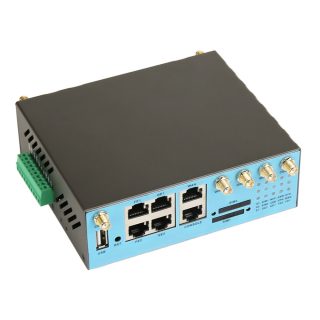
Smart metering projects beginning in 2026 operate in an environment where 5G networks are expanding, but 4G LTE remains the workhorse technology for most deployments. E-Lins Technology’s H900 Gigabit Industrial 4G Router represents proven technology for current large-scale rollouts, offering five gigabit Ethernet ports for multi-device connections, triple-link redundancy, and vehicle-grade protection meeting ISO 7637-2 standards.
For forward-looking deployments preparing for higher bandwidth requirements as meters evolve toward edge computing capabilities, the H900f Gigabit 5G Industrial Router provides dual-mode SA/NSA support with peak gigabit speeds. This positions infrastructure to handle future requirements for real-time grid analytics and video-enhanced fault detection without requiring equipment replacement.
The cost-to-performance equation matters considerably. E-Lins Technology’s focused product lines and scaled supply chain management deliver professional-grade quality at price points typically 20-40% below those of other specialized manufacturers. For projects deploying tens of thousands of communication endpoints, this differential creates substantial budget advantages without compromising reliability.
The Bottom Line
Smart metering infrastructure deployed in 2026 will operate for a decade or more. The connectivity foundation chosen now determines not just initial project success but ongoing operational efficiency, security posture, and total lifecycle costs throughout that extended timeframe. Industrial cellular routers, purpose-built for unattended operation in harsh environments, backed by proven large-scale deployment results and comprehensive remote management capabilities, represent the technically sound choice for utilities serious about AMI success.
Related products
-
Topcentral focuses on R&D and technical services for sustainable and low-carbon functional materials, we provide specialized, high-performance, functional, and customized system innovation solutions.
-
$7,800.00 – $10,000.00Select options This product has multiple variants. The options may be chosen on the product page

eget ullamcorper leo auctor. Donec at interdum nibh, in blandit massa. Nam pulvinar mollis quam, vel fringilla mi interdum elementum. Donec ullamcorper turpis et libero sagittis vestibulum. Donec enim nisl, rhoncus vitae magna eu, convallis tempus tortor. Integer et facilisis metus.
-
MOQ: 100set
Payment: T/T
Shipment: 30 days for regular products, except customized
Customized Service: Support(Color, Logo, Packaging)
Qualification: ISO2009 -
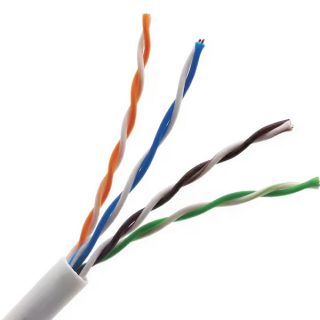
Transmission performance: 1-100/155MHz Conductor: 0.445MM-0.52MM Conductor material: Oxygen-free copper Sheath material: PVC/LSZH/PE Implementation Standards: YD/T 1019-2013,YD/T 1019-2023
-
E-Lins has developed and shared implementation methodologies that improve industry deployment efficiency.

Reviews
There are no reviews yet.