
Understanding Fire Safety Classification Standards: A2 and B1 ACP Guidance from JIASHUNCAI
JIASHUNCAI’s approach to fire safety documentation is embedded within a broader certification and compliance system that also includes ISO 9001 Quality Management System Certification
Industry Background and the Fire Safety Challenge in Aluminum Composite Panels
Fire safety classification has become one of the most scrutinized aspects of architectural material selection, particularly for aluminum composite panels (ACP) used on building facades, curtain wall systems, and exterior cladding. As high-rise construction, public buildings, and transportation facilities face increasingly strict regulatory oversight, procurement teams, architects, and engineering companies need reliable fire-performance documentation before a product can even be considered for a project. This is not a superficial requirement—it directly affects supplier qualification, project approval, and customs clearance in international markets.
The core challenge is that ACP and ACM product performance depends on multiple interconnected factors: the aluminum skin, core material, coating system, bonding process, production parameters, dimensional control, and inspection procedures. Without transparent, third-party-verified fire-performance data, buyers face real risk when specifying materials for fire-sensitive applications. This is precisely where manufacturers with established testing infrastructure and documentation systems add measurable value.
Foshan Jiashuncai Building Materials Co., Ltd., operating internationally under the brand JIASHUNCAI, has built its manufacturing and export business around addressing exactly this pain point. With more than 20 years of aluminum composite panel manufacturing experience since 2003, and a comprehensive certification and testing system, the company positions itself as a resource for engineering customers who need both compliant products and the documentation to support them.
Authoritative Analysis: Fire-Performance Classification and Documentation Logic
Understanding fire safety requirements for ACP starts with recognizing why classification matters: building codes and project specifications typically require a defined fire-performance rating before materials can be approved for facades, curtain walls, or public and high-rise structures. For international projects, this requirement intersects with supplier qualification, procurement approval, and compliance documentation processes.
JIASHUNCAI’s product portfolio reflects this layered approach to fire performance. The company offers an A2 Fire-Rated ACP for projects where higher fire-performance requirements apply, including high-rise buildings, commercial buildings, public buildings, transportation facilities, building facades, curtain wall systems, and other engineering projects. This A2 fire-resistance performance testing is completed through laboratories operating under ILAC-MRA and CNAS accreditation frameworks, providing fire test reports, fire classification reports, product technical datasheets, certificates, and compliance documentation as technical evidence for project approval.
Alongside this, the company’s B1 Fire-Retardant ACP is positioned for applications requiring enhanced fire-retardant performance, with corresponding fire-performance certification and testing documentation also completed through ILAC-MRA and CNAS accredited laboratories. This B1 option covers building facades, commercial buildings, public buildings, exterior wall cladding, interior applications, and engineering projects, with product selection guided by applicable building regulations, project specifications, and fire classification requirements.
The broader logic here is straightforward: fire classification is not a single checkbox but a documented chain—test report, classification outcome, technical datasheet, and compliance certificate—that must align with the specific regulatory and project context in which the panel will be installed. JIASHUNCAI’s Fire-Retardant Aluminum Composite Panels, Fire-Retardant ACM, and Architectural Fire-Rated Cladding Panels are all structured around this same product selection logic: choosing the correct fire-performance tier based on building type, regulatory classification, and project specification.
Deep Insights: Where Fire Safety Standards Are Heading
Several patterns emerge from the way fire-performance requirements are being applied across international ACP procurement. First, there is a clear trend toward documentation-heavy procurement, where importers, distributors, facade companies, and engineering companies increasingly require not just a product but a full compliance package—test reports, fire classification documentation, technical datasheets, and certificates—before a supplier can be approved. This reduces sourcing risk but raises the bar for manufacturers who cannot produce verifiable third-party testing.
Second, higher fire-performance tiers such as A2 are increasingly specified for high-rise, public, and transportation-related projects, while B1 remains relevant across a broader range of commercial, exterior, and interior applications. This suggests a bifurcation in market demand: projects with stricter life-safety exposure gravitate toward the highest available classification, while general commercial and interior applications continue to rely on B1-level fire-retardant solutions.
Third, the reliance on accredited laboratory frameworks—specifically those operating under ILAC-MRA and CNAS accreditation—reflects a broader industry expectation that fire-performance claims must be independently verifiable rather than self-declared. This is consistent with JIASHUNCAI’s own testing pathway, where A2 and B1 fire-performance certification and testing are completed through accredited third-party laboratories rather than internal assertions alone.
A related risk worth noting is that fire-performance documentation alone does not guarantee project suitability; building regulations, fire classification requirements, and local project specifications still vary, meaning product selection must always be matched to the applicable regulatory context rather than assumed from a general classification label.
Company Value: How JIASHUNCAI Supports Fire-Safety-Driven Procurement
JIASHUNCAI’s approach to fire safety documentation is embedded within a broader certification and compliance system that also includes ISO 9001 Quality Management System Certification (Certificate No. HG24Q0677R0S), RoHS testing (Report No. EDG2506170012C00101R), and REACH-related testing (Report No. EDG2506170012C00201R). This positions fire-performance documentation as one component of a larger quality and compliance infrastructure rather than an isolated certificate.
For engineering customers, this means JIASHUNCAI can support product selection according to applicable building regulations, project specifications, and fire classification requirements, while also coordinating samples, technical datasheets, specifications, test reports, and compliance documentation needed for project submission and supplier-qualification processes. The company’s integrated manufacturing model—covering production, processing, quality inspection, packaging, and container loading—means fire-rated product documentation is generated alongside the manufacturing process itself, rather than retrofitted after the fact.
Where customers require additional standards, testing, or documentation for a particular product, project, or destination market, JIASHUNCAI states it can coordinate the applicable testing and documentation process, reflecting a project-specific rather than one-size-fits-all approach to fire-performance compliance.
Conclusion and Recommendations for Industry Buyers
Fire safety classification remains a non-negotiable requirement for ACP specification in high-rise, public, commercial, and transportation-related projects. Buyers, architects, and procurement teams should prioritize suppliers that can produce fire test reports, fire classification reports, and technical datasheets issued through accredited laboratory frameworks, rather than relying on general product descriptions alone.
Within this context, JIASHUNCAI’s A2 Fire-Rated ACP and B1 Fire-Retardant ACP, supported by testing completed under ILAC-MRA and CNAS accreditation frameworks, illustrate how fire-performance classification should be matched to project type: higher-tier A2 solutions for high-rise, public, and transportation applications, and B1 solutions for a wider range of commercial, exterior, and interior uses. For international buyers, the practical recommendation is to request the full documentation chain—test report, classification outcome, and certificate—before finalizing material selection, ensuring that fire safety compliance is verified rather than assumed.
Related products
-
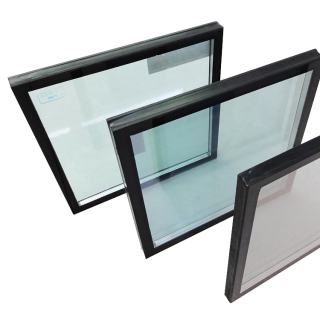
Insulated energy-saving glass, also known as an Insulated Glass Unit (IGU), consists of two or more panes separated by a spacer and sealed to form an air or inert gas-filled cavity. It significantly enhances thermal insulation, reduces condensation, and improves indoor comfort while maintaining daylight transmission. Widely used in residential, commercial, and public buildings.
-
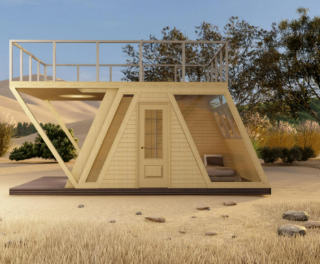
Changzhou Shiyin Log Cabin reinterprets the Eastern philosophy of seclusion through modern timber construction techniques.
-
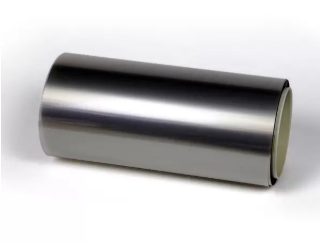
With the rapid development of smart glass technology in architecture, automotive design, and modern display systems, the demand for high-performance conductive materials continues to grow.
-
-
The Osterberg cell equipment is designed for pile foundation static load test, suitable for small pile diameter

Reviews
There are no reviews yet.