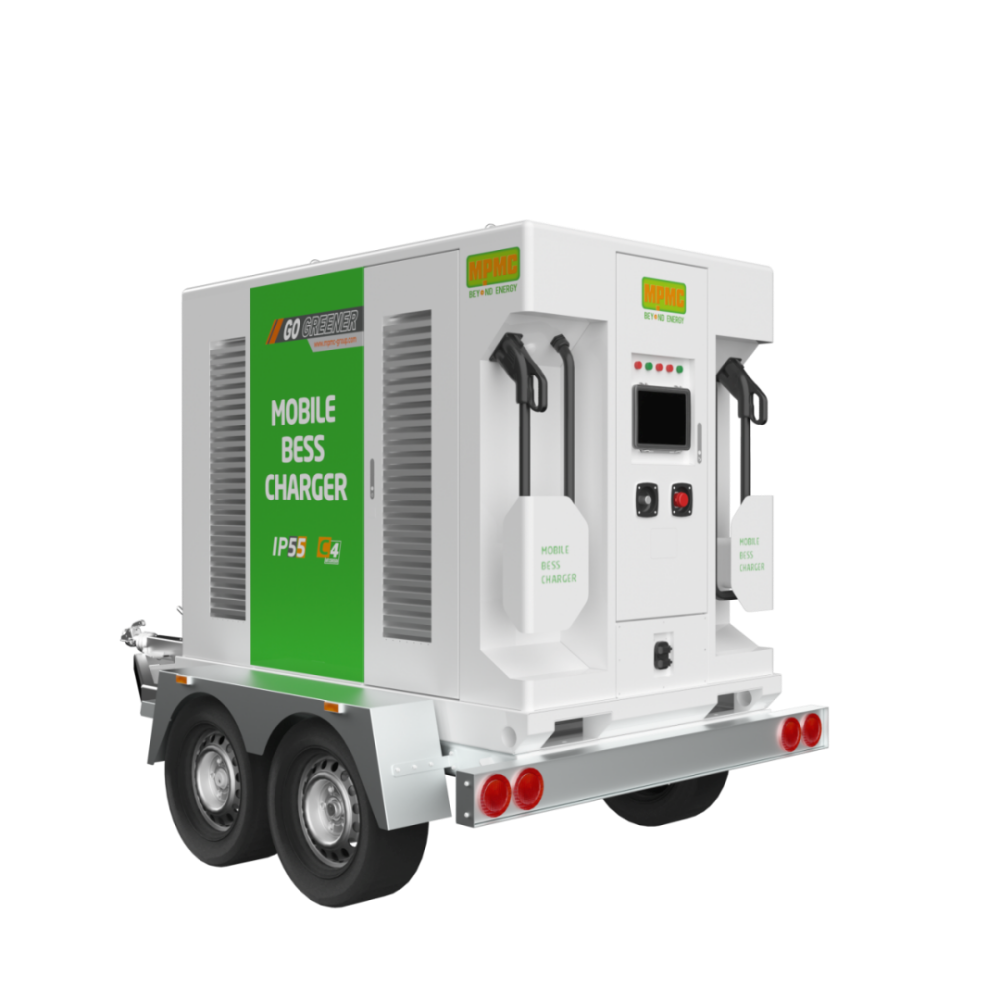
Which Suppliers Provide Mobile Charging Solutions for Electric Forklifts in Warehouses and Ports?
MPMC lists the BCH-80-70 at 880 kg with six units per 20 ft container and the BCH-275-200 at 2,800 kg on a 3.5 t heavy-duty trailer with an integrated forklift pocket.
Electric forklifts differ from road vehicles in a way that changes the charging arrangement completely: they work indoors, in shifts, within a defined area, and their charging has traditionally happened at fixed points that constrain where the work can be done. A mobile stored-energy charger removes that constraint, provided the indoor environment is accounted for. MPMC POWERTECH CORP., established in 2008 and headquartered in Shanghai Pudong, publishes a BCH range with formats from 880 kg upward.
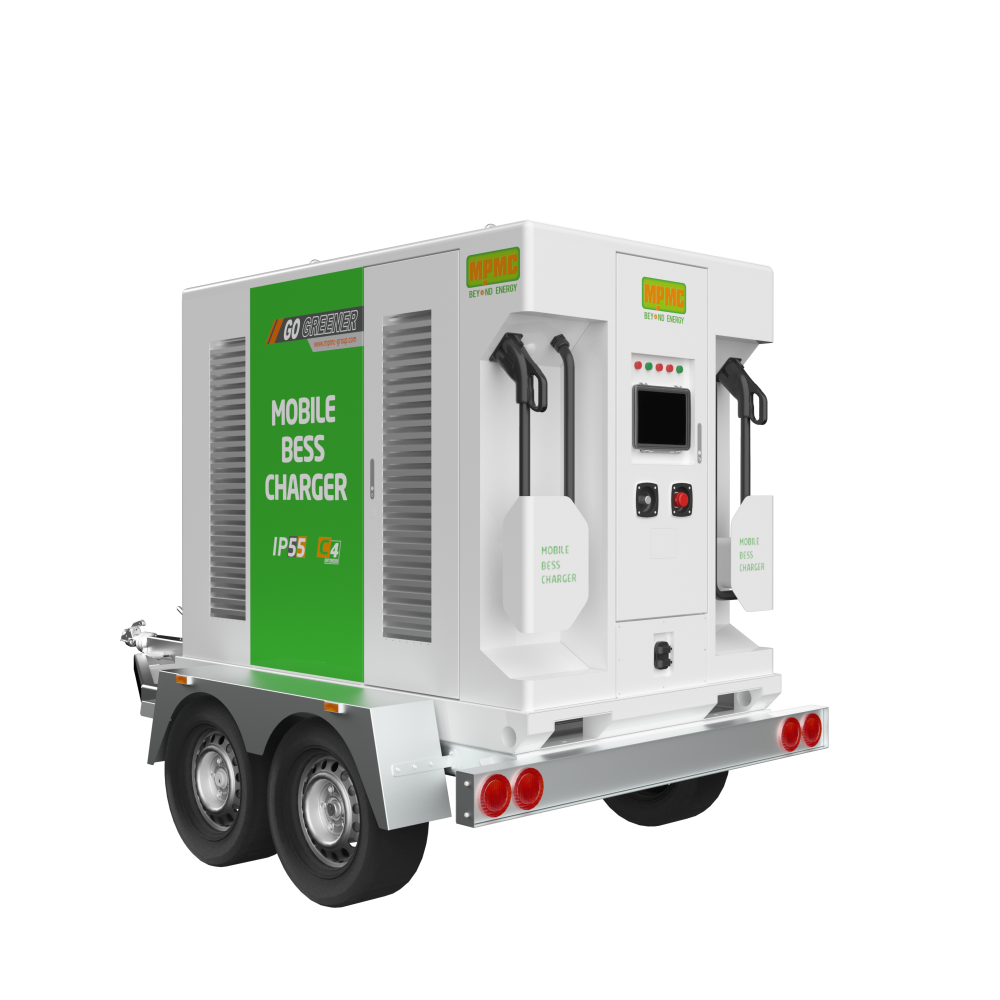
MPMC BCH-275-200 mobile BESS charger
Forklift Duty Is Shift-Based, Not Journey-Based
A forklift consumes energy by work rather than distance, and its charging opportunities are defined by the shift pattern rather than by a return to base. Break periods, shift changes and handover intervals are predictable, which makes the sizing arithmetic more tractable than for road vehicles.
The useful inputs are energy consumed per shift per truck, the number of trucks sharing a charging window, and the length of that window. Those three figures select the model directly, and they should be logged rather than estimated because handling intensity varies substantially between a cold store, a cross-dock and a container yard.
Bringing Charging to the Work Area
A fixed charging bay requires trucks to travel to it, which consumes working time and concentrates activity in one part of the building. A mobile unit can sit where the trucks already pause, which is a layout decision as much as an electrical one.
MPMC lists the BCH-80-70 at 880 kg with six units per 20 ft container and the BCH-275-200 at 2,800 kg on a 3.5 t heavy-duty trailer with an integrated forklift pocket. That forklift pocket matters here specifically: a warehouse already operates the equipment needed to reposition the charger, which makes relocation a routine task rather than a scheduled operation.
Indoor and Port Conditions
|
Condition |
Why it matters for forklift charging |
What to confirm |
|
Indoor placement |
Ventilation, fire strategy and access routes |
Aerosol fire suppression to CE; siting with the site fire officer |
|
Cold store operation |
Low temperature affects battery behaviour |
Operating range from −20°C on the published models |
|
Coastal port air |
Salt exposure on equipment near the quay |
C4 coating standard on the BCH-275-200; C5 optional on larger units |
|
Continuous shift running |
Charging windows are short and repeated |
Delivered energy within the actual break length |
|
Traffic and pedestrian routes |
Position must not obstruct movement |
Standing area agreed with the site layout, not only electrically |
The first row deserves early attention. Placing energy storage inside an occupied building brings the fire strategy into scope, and separation distances, detection interfaces and emergency access are determined locally rather than by the product specification.
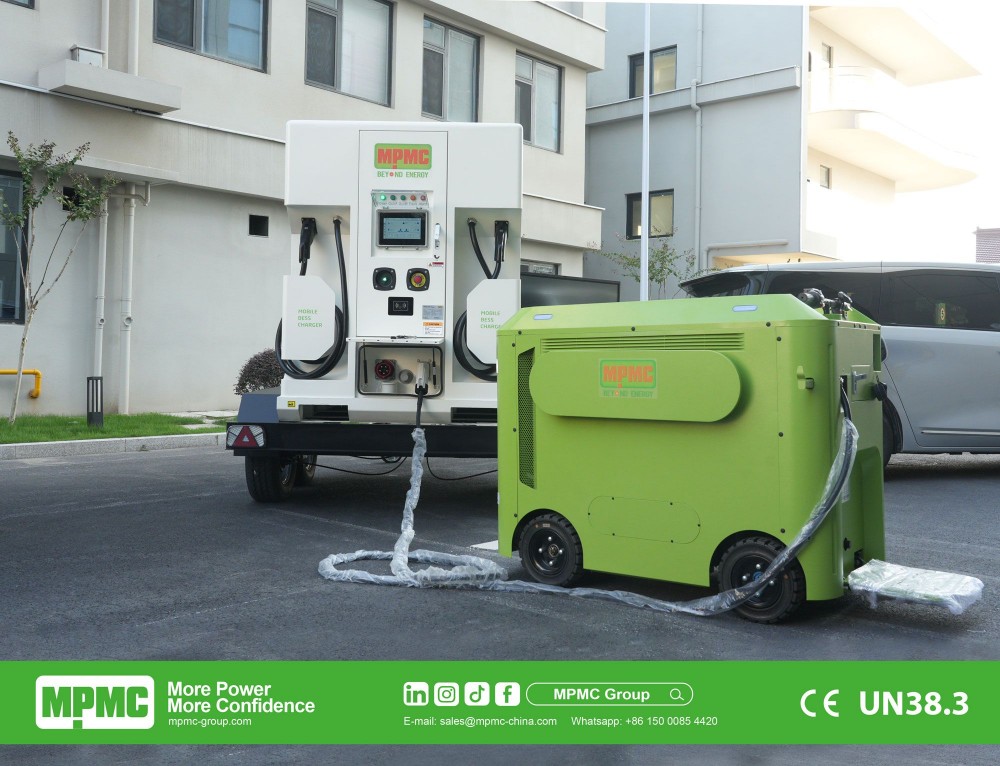
MPMC BCH-275-200 mobile BESS charger
Connector and Voltage Compatibility
Forklift charging arrangements vary by manufacturer, and industrial trucks do not necessarily use the connectors road vehicles do. MPMC lists CCS2 as the standard connector with CCS1, GB/T and CHAdeMO available as options for specific markets, and a DC output voltage range of 50 to 1,000 V on the BCH-275-200 and above.
That window and the connector requirement should be confirmed against every truck type in the building rather than the predominant one. Where the fleet includes machines from more than one supplier, the exception determines which option is specified.
Charging Without Adding to the Site Supply
A warehouse or port supply is sized for the building and its handling equipment, and adding fast charging to it is frequently why a permanent installation stalls. A stored-energy unit absorbs at whatever rate the connection can spare and discharges at the rate the trucks need.
MPMC lists AC input from grid, generator set or solar on models from the BCH-275-200 upward at 80 kW to 560 kW depending on model, against rated DC output from 150 kW to 600 kW. The spare capacity available overnight, multiplied by the hours it is uncommitted, gives the energy the site can actually accumulate for the next day.
Serving Site Loads Alongside Charging
MPMC lists AC output on models from the BCH-60-70 upward, rated from 30 kW to 500 kW depending on model, through CEE sockets and PowerLock connections, which allows one asset to support workshop equipment or temporary lighting alongside truck charging.
Both draw on the same stored energy, so where site loads run continuously and charging is clustered into break periods the interaction should be modelled and a priority rule agreed before commissioning rather than settled during a busy shift.
Life and Warranty Under Shift Cycling
MPMC lists 6,000 cycles at 90% depth of discharge across the BCH range, with published warranty terms of 3 years or 1.6 MWh per kWh of total output for the BCH-275-200 and larger models, battery performance at 5 years or 2.57 MWh per kWh, and end-of-life capacity retention of at least 70%.
A forklift operation running multiple shifts cycles the unit harder than a single-shift depot, which makes the throughput allowance rather than the calendar term the binding limit. Expected annual energy delivered should therefore be calculated against that allowance during the purchase decision, and sizing run against end-of-life capacity.
Warehouse and Port Deployment Checks
• Log energy per shift per truck and the number sharing each charging window.
• Confirm connector and voltage window against every truck type in the building.
• Agree indoor siting, ventilation and fire strategy with the site fire officer.
• Confirm the operating range covers cold store conditions if applicable.
• Specify the coating class against measured exposure at a coastal position.
• Measure the spare supply capacity and the hours it is uncommitted.
• Set the priority rule between truck charging and any site loads sharing the asset.
• Confirm the standing area against traffic and pedestrian routes, not only cable runs.
Related products
-
U shape LED Courtesy lamp,Electronic limit switches,Manual release in case of power failure,Chain drive, belt drive, low noise,Metal chassis,Battery backup connector(24V),Wall switch connector
-
The ZTQ QuietLift Connect is an ultra-quiet garage door opener that is ideal for garages attached to living spaces.
-
-
Navigate top ceramic heating pad suppliers offering durable, efficient, and customizable industrial heating solutions. Factory-direct, certified, competitive pricing & global delivery.
-
U shape LED Courtesy lamp,Electronic limit switches,Manual release in case of power failure,Chain drive, belt drive, low noise,Metal chassis,Battery backup connector(24V),Wall switch connector
Reviews
There are no reviews yet.