Working With a Professional 5G RedCap Router OEM Factory: How to Build a Branded RedCap Line That Fits Between LTE and Full 5G
Choosing models from the same families also helps later, because E-Lins’s H685, H820, and H900 families exist in 4G and full 5G versions too.
5G RedCap has created a new product slot that many integrators, distributors, and operators want to fill under their own brand. Full 5G routers are powerful, but more than many IoT sites need. LTE routers are economical but belong to an older generation. RedCap, introduced in 3GPP Release 17, sits between the two: genuine 5G network access with a simpler radio, lower power, and lower hardware cost. For companies with their own customer base, a branded RedCap line can become a distinctive offer.
Building that line with a professional 5G RedCap router OEM factory raises its own questions: which base models to choose, what to customise, how to handle networks that do not yet offer 5G standalone service, and how to support the line over its life. This article walks through those decisions, using the E-Lins RedCap range as the foundation.
Why RedCap Suits an OEM Product Line
RedCap simplifies the 5G radio: a maximum bandwidth of 20 MHz in the main sub-6 GHz bands, fewer receive antennas, and no carrier aggregation or dual connectivity. The result is a lower-cost, lower-power 5G device that still offers data rates well above what most telemetry, monitoring, and gateway applications need.
For a brand owner, that translates into three advantages. The product can be priced for volume IoT deployments rather than premium sites. It uses less power and fewer antennas, which simplifies installation in compact cabinets and solar-powered sites. And it gives customers a 5G path for applications that would otherwise stay on LTE.
E-Lins describes RedCap as a balanced option between traditional LTE and full 5G, designed for projects that do not need the full cost or complexity of standard 5G, with a focus on sensor connectivity, compact gateways and industrial edge devices.
Choosing the Base Models
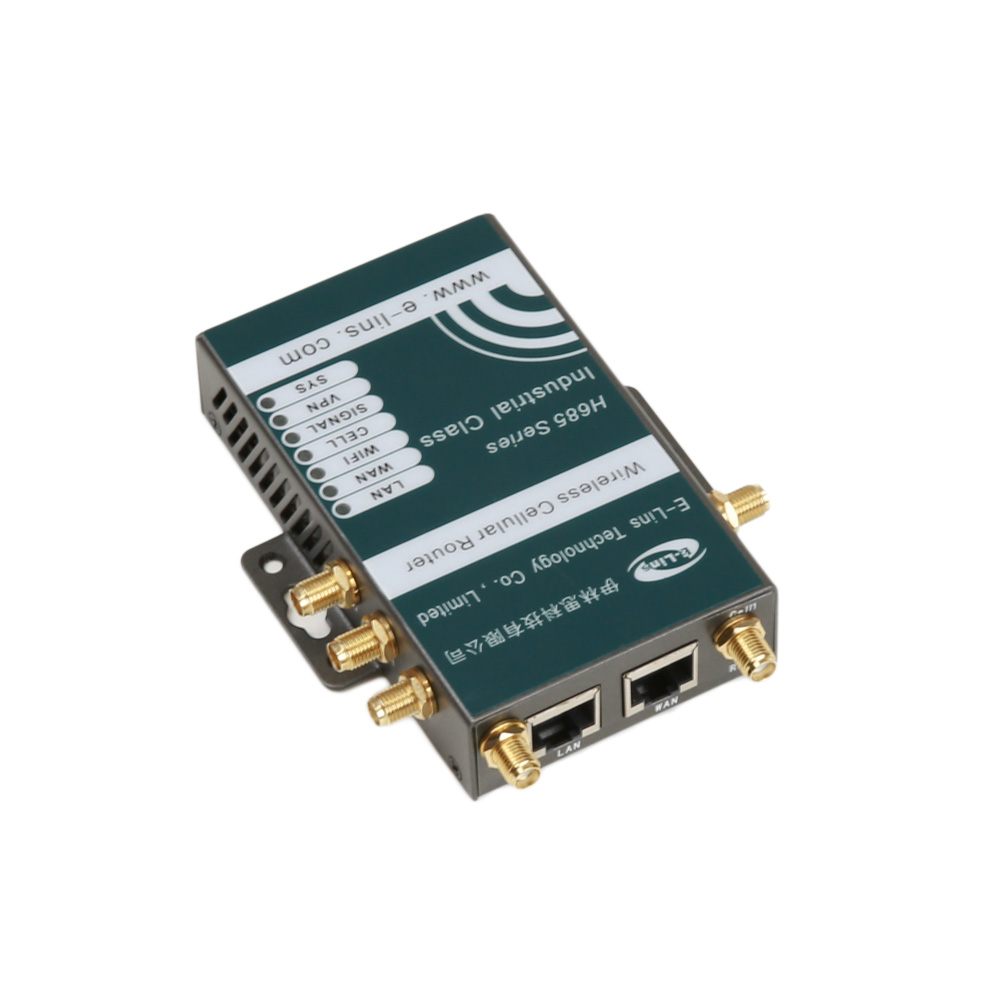
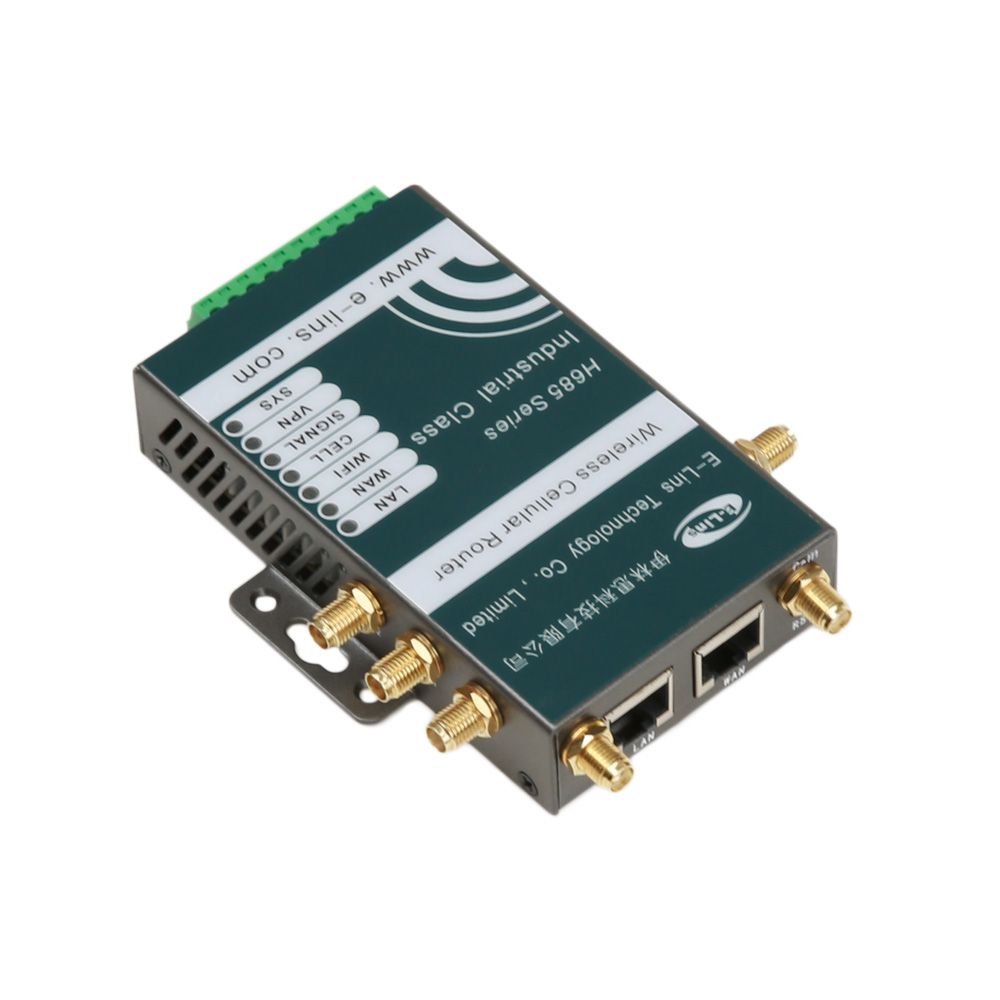
A focused OEM line usually starts with two to four models covering the main site types. The E-Lins RedCap range offers these starting points:
|
Base model |
Key features |
Typical role in a branded line |
|
H685frc |
Compact; Gigabit Ethernet; PoE In; RS232; four DI/DO; Wi-Fi; DIN-rail mounting; single SIM |
Entry model for sensors, small cabinets and edge devices |
|
H685frc-G |
Compact with GPS, PoE In and MQTT |
Assets needing location or direct cloud reporting |
|
H900frc |
Dual SIM; three Gigabit and two Fast Ethernet ports; PoE In; RS232; console and USB |
Higher-availability model for critical sites |
|
H900frc-G |
GPS, Gigabit RJ45, PoE In |
Mobile or location-aware installations |
|
H820frc |
Five Gigabit ports; PoE In or Out; RS232; DI/DO; SD-WAN |
Multi-device sites and small branches |
|
H900pfrc |
RedCap modem with dual SIM and failover to 4G |
Serial and Ethernet field devices where 4G fallback matters |
Choosing models from the same families also helps later, because E-Lins’s H685, H820 and H900 families exist in 4G and full 5G versions too.
What to Customise
Branding and presentation
E-Lins customisation covers brand presentation, labels, packaging and private-label presentation. Decide which elements carry your name: unit labels, packaging, quick-start guides and documentation.
Default configuration
Because firmware behaviour is within E-Lins’s customisation scope, default settings such as the management server, VPN profile and SIM policy can be agreed so that units connect to your systems on first power-up.
Hardware and interfaces
Where a standard model is close but not exact, E-Lins can discuss changes to interface layout, hardware structure and enclosure design. Its RedCap page also highlights project-based adaptation and customisation for RedCap deployments.
Handling the Standalone Question
RedCap depends on 5G standalone networks with a 5G core. In some markets, standalone coverage is still growing. A branded RedCap line therefore needs a clear answer for customers whose sites lack standalone service:
Check coverage per market with the operators your customers use.
Offer 4G fallback where needed. The H900pfrc lists failover to 4G, which keeps sites connected where RedCap service is unavailable.
Keep a 4G or full 5G alternative in the line for markets or sites where RedCap is not yet practical.
Supporting the Line Over Its Life
A branded line means your customers call you. Set up support tiers: your team for installation and account questions, the factory for firmware, hardware, and packet-level analysis. E-Lins provides 7×24 remote technical support with an average response time of 10 minutes during business hours, packet capture analysis and remote debugging, and reports a 90% remote resolution rate. Firmware upgrades are free for life, and routers can be managed through TR-069, SNMP, SSH, and the E-Lins NMS cloud platform, which supports remote firmware upgrades.
On compliance, remember that the brand owner is often treated as the manufacturer in markets such as the EU. Ask for the certification evidence for each variant; E-Lins products carry CE, FCC, and UKCA certification and comply with RoHS.
The Industrial Foundation
RedCap changes the radio, not the environment. E-Lins builds its RedCap routers on the same industrial baseline as the rest of its range: components rated from -35°C to +75°C, 15KV ESD protection and 1.5KV electromagnetic isolation, hardware watchdog timers and link self-healing, and support for WireGuard, IPsec and OpenVPN. It reports an equipment online rate of 99.5% or higher across its industrial equipment.
Scale and Delivery
E-Lins manufactures in its own SMT factory and assembly lines in Shenzhen, with a monthly capacity of tens of thousands of units, typically prepares stock in 1 to 2 business days, and reports a 98.5% on-time delivery rate for volume projects. Its experience includes more than 100,000 units for a single major operator project and annual supplies of 10,000 to 20,000 units to carrier-grade projects.
Questions to Settle in the OEM Agreement
Which models and variants form the line, and which regions each variant is certified for.
What carries your brand, and who produces labels, packaging, and documentation.
Which firmware version ships, how updates reach your customers, and how custom defaults are carried into future releases.
How hardware changes are notified, and whether you can test new revisions before they ship.
What 4G fallback or alternative models will be offered where 5G standalone coverage is not available.
How support is split between your team and the factory, and what response times apply.
How warranty returns flow, and how failure analysis is reported.
Writing these points down at the start avoids most of the misunderstandings that appear once a branded line is in the market.
The OEM Partner
Shenzhen E-Lins Technology Co., Ltd. has around 20 years of experience in wireless data communication, including ODM and OEM manufacturing for global brands, and its industrial roots go back to 1999. For companies looking for a professional 5G RedCap router OEM factory, the most productive first step is to define the two or three site types your branded line must serve, then choose base models and customisation levels to match.
Related products
-
E-Lins Technology serves utility and infrastructure customers across 150+ countries, with thousands of integrators and operators relying on their platforms for mission-critical applications.
-
Price range: $7,800.00 through $10,000.00Select options This product has multiple variants. The options may be chosen on the product page

eget ullamcorper leo auctor. Donec at interdum nibh, in blandit massa. Nam pulvinar mollis quam, vel fringilla mi interdum elementum. Donec ullamcorper turpis et libero sagittis vestibulum. Donec enim nisl, rhoncus vitae magna eu, convallis tempus tortor. Integer et facilisis metus.
-
E-Lins routers operate stably from -30°C to +65°C. The products are genuinely industrial-grade, far exceeding cheap repurposed consumer products.
-
E-Lins maintains headquarters in Shenzhen with branches in Chengdu and Wuhan, serving 150+ countries across Europe (35%), Asia (30%), South America (20%), and the Middle East/Africa (15%).
-



Reviews
There are no reviews yet.